

Durable Screen Printed Team Uniforms: A Complete Guide
Last Updated: November 4, 2026
Quick Summary
Durable screen printed team uniforms hold up because the ink bonds into the fabric rather than sitting on top of it, making screen printing outlast DTF on cotton and cotton-blend team apparel under repeated washing and heavy seasonal wear. Durability depends on ink type, mesh count, fabric content, and curing temperature, so confirm the garment and print method together before ordering.
- Screen printing pushes ink into the weave, so the print moves with the fabric instead of cracking at flex points.
- Cotton and cotton-poly blends accept plastisol ink cleanly and hold color through repeated washing.
- High-polyester performance fabrics are a poor match for standard plastisol and usually need sublimation or poly-specific ink.
- Run a stretch test, three-wash test, and tape adhesion check on samples before the full order ships.
- Wash uniforms inside out in cold water, tumble dry low or hang dry, and never iron directly over the print.
Table of Contents
- Why Screen Printing Holds Up on Team Uniforms
- Screen Printing vs. DTF for Uniforms: Which Lasts Longer?
- The Best Fabric for Screen-Printed Uniforms
- Custom Team Jerseys With Names and Numbers
- How Print Durability Varies by Ink, Fabric, and Curing
- How to Wash Screen-Printed Team Apparel
- Ordering Durable Screen Printed Uniforms From Prime Sports
- Frequently Asked Questions
Why Screen Printing Holds Up on Team Uniforms
Screen printing remains a widely used decoration method for durable team uniforms because the ink bonds into the fabric rather than sitting on top of it. Baseball and softball programs, where the same jersey may be worn several times a week across a long season, put that durability to the test. A properly cured plastisol print is built for that kind of schedule, while lower-quality heat transfers are more prone to failure.
The appeal comes down to a few things. Screen printing handles multi-color graphics, large graphics, and bold team logo work. It is well suited to cotton and cotton-blend uniform fabric, and it is a common choice for bulk orders.
What most guides miss is that screen printing's durability is not automatic. It depends on ink type, mesh count, fabric content, and curing temperature. Get any of those wrong and you have a print that looks sharp in the team photo and starts cracking by the second wash. The American Apparel and Footwear Association guidance on care labeling matters here, because the care instructions printed on the garment are only accurate if the decoration was applied correctly in the first place.
Screen Printing vs. DTF for Uniforms: Which Lasts Longer?
Screen printing outlasts DTF on cotton and cotton-blend team apparel, particularly under repeated washing and heavy seasonal wear. DTF transfers sit as a film layer on the garment surface, which makes them vulnerable to edge lifting and cracking at flex points like shoulders and hems. Screen printing pushes ink into the weave, so the print moves with the fabric.
That said, DTF has real advantages for small runs and full-color photographic designs, which can make it a reasonable fit for spirit wear or one-off personalization. For sports jerseys that will be worn weekly and washed constantly, screen printing is generally the more durable choice.
| Factor | Screen Printing | DTF Transfer |
|---|---|---|
| Best fabric match | Cotton, cotton blends | Polyester, blends |
| Durability under washing | High | Moderate |
| Multi-color graphics | Cost-effective at volume | Cost-effective at low volume |
| Minimum order practicality | Better in bulk | Better for small runs |
| Feel on garment | Ink in fabric | Film on fabric |
| Best for | Season-long uniforms | Spirit wear, samples |
The tradeoff is straightforward. If your organization needs uniform replacement mid-season, screen printing's consistency across reorders is the deciding factor.
The Best Fabric for Screen-Printed Uniforms
Cotton and cotton-poly blends are the best fabric for screen-printed uniforms because they accept plastisol ink cleanly and hold color through repeated washing. 100% cotton gives the softest hand and the most saturated print. A 50/50 blend adds durability and shrinkage control, which matters for youth programs ordering a full roster of sizes. A 60/40 cotton-poly blend can balance softness and print longevity for season-long team wear.
Fabric content is not a background detail, it determines how the ink mechanically locks into the weave and how the print behaves after fifty washes. Tight, smooth knits hold a crisp plastisol edge; open, slubby knits let ink sit deeper and can look softer but wear unevenly at high-flex points. Heavier garment weights generally tolerate more wash cycles than lightweight fashion blanks.
Watch out: high-polyester performance fabrics are a poor match for standard plastisol. The ink does not bond the same way, and you get adhesion failures that show up as flaking. Those fabrics usually call for sublimation or a poly-specific ink system instead.
That is where the screen printing versus sublimation decision becomes fabric-specific rather than philosophical. Sublimation dyes the polyester fiber itself, which is why it is often used for high-polyester garments with full-color designs. Screen printing works on cotton, blends, and some poly with the right ink system. Confirm the garment and the print method together before you commit a roster.
Custom Team Jerseys With Names and Numbers
Names and numbers are a common part of team uniform decoration. Player numbers are often printed in a single color, while names on the back may require additional setup, depending on the print method used.
For programs that need personalized jerseys across a full roster, one common approach is to standardize the body of the uniform and vary only the name and number panels. You can find team jersey options on our Custom Tee Vision Jersey page.

A common mistake is ordering names and numbers on a fabric that was never tested with the ink. Confirm the garment and the print method together, not separately.
How Print Durability Varies by Ink, Fabric, and Curing
Print longevity depends on several variables, including ink chemistry, fabric content, and curing temperature. Under-cured ink can look fine initially but may begin to fail after a number of washes. Water-based and discharge inks penetrate the fiber differently than plastisol and require different process control and fabric matches.
Fabric content determines how much the ink can mechanically lock into the weave. Tight weaves hold ink differently than open knits. Curing determines whether the ink fully fuses. Rushing the dryer to meet a deadline can contribute to premature cracking. Curing temperature is an important factor in print durability, and temperatures are typically verified at the ink film rather than relying only on the dryer setting.
Because durability claims are only useful if a team can verify them, run a simple three-part check when a sample or first delivery arrives. First, the stretch test: stretch the printed area gently across the grain; a properly cured print flexes with the fabric, while an under-cured print shows fine cracks or a chalky edge. Second, the wash test: wash one garment inside out in cold water and tumble dry low three times, then inspect edges and high-flex zones for lifting, peeling, or fading. Third, the adhesion check: press a piece of clear tape firmly over a printed corner, peel it back, and look for ink transfer, a clean peel is a good sign, ink on the tape is not. These are the same failure modes that show up mid-season, caught early enough to raise with your printer before the full order ships.
Our guide to avoiding custom apparel printing issues covers common defect types and their causes. Inconsistent curing is one frequent cause of prints that fail unevenly within a batch.
How to Wash Screen-Printed Team Apparel
Wash screen-printed team apparel inside out in cold water on a gentle cycle, then tumble dry low or hang dry. Heat is the enemy of print longevity, and the two habits that destroy prints fastest are hot water and a hot dryer.
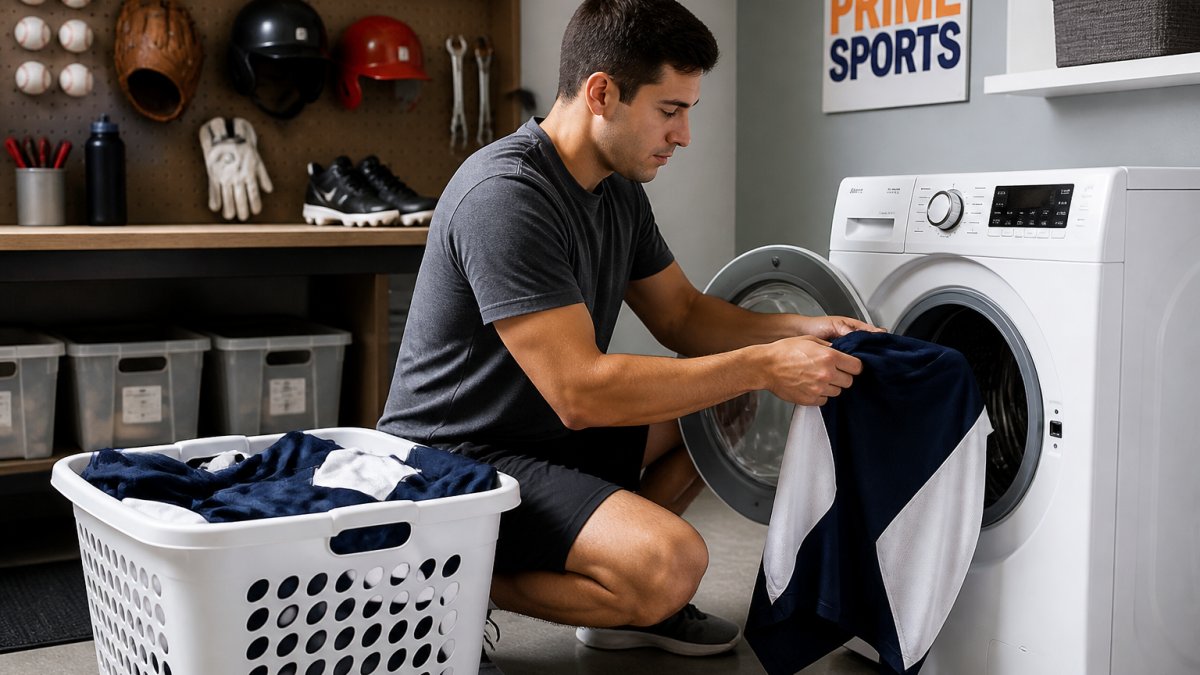
Here is the routine we recommend to every team we outfit:
- Turn the garment inside out before washing
- Use cold water and a gentle cycle
- Skip fabric softener, which can degrade the ink bond
- Avoid bleach and harsh stain removers on printed areas
- Tumble dry low or hang dry
- Never iron directly over the print
For a deeper walkthrough, our article on how to prevent jersey print cracking covers the seven steps that matter most for season-long wear. Teams that follow this routine consistently get more seasons out of the same set of uniforms, which directly reduces uniform replacement costs.
Ordering Durable Screen Printed Uniforms From Prime Sports
Ordering durable screen printed team uniforms starts with matching the decoration method to the fabric and the season length, not with picking a color. Prime Sports offers custom uniform and team store services for youth leagues, travel teams, high schools, colleges, and organizations.
For program managers juggling multiple teams, our guide on simplifying bulk uniform ordering covers how to consolidate sizes and orders. League organizers setting up a storefront can read how to start an online team store for leagues. And if you want to compare decoration options side by side before committing, our complete guide to custom apparel printing issues is the place to start.
Frequently Asked Questions
Is screen printing durable enough for team uniforms?
Yes. Screen printing pushes plastisol or water-based ink into the fabric and cures it with heat, so the print bonds to the garment rather than sitting on top of it. On cotton and cotton-blend uniforms, a properly cured screen print holds color and shape through a full season of games and repeated washing. Durability depends on three things: ink type, fabric match, and curing temperature.
What is more durable, DTF or screen printing?
For team uniforms worn and washed frequently, screen printing is often the more durable choice. DTF transfers a printed film onto the garment with heat, and that film can crack, peel, or fade at the edges after many wash cycles, especially on stretchy performance fabrics. Screen printing cures ink directly into the material, so it flexes with the fabric and resists cracking. DTF has advantages for small runs and complex full-color art, but for uniforms worn weekly and washed constantly, screen printing is the safer long-term choice.
Which fabrics work best for screen-printed sports uniforms?
Cotton and cotton-poly blends take screen printing best because the ink bonds tightly to natural fibers. For performance uniforms, 100% polyester is common but needs the right ink and curing setup, since standard plastisol does not adhere well to smooth polyester. Ask your printer how ink is matched to the fabric before production. Jersey knit and mesh fabrics used in baseball and softball uniforms print well when the mesh is tight enough to hold detail.
How should you wash screen-printed team uniforms to make them last?
Turn uniforms inside out, wash in cold water on a gentle cycle, and skip fabric softener, which breaks down ink over time. Avoid bleach and never iron directly over the print. Tumble dry on low or hang dry. Wash uniforms separately from items with zippers or velcro that can snag the print. Following these care steps can help screen-printed uniforms look better for longer.
Can names and numbers be screen printed on team uniforms?
Yes. Screen printing handles names and numbers well, including multi-color designs and large graphics on jerseys. For individual player names, printers may set up each name separately, which can affect setup and cost. Confirm font size and placement with your printer early, since roster changes late in the process can affect setup and turnaround.
Durable screen printed team uniforms come down to decisions made before the first stitch: the right fabric, the right ink, and a shop that does not rush the cure. That is the standard we hold ourselves to at Prime Sports. We offer screen printing, embroidery, custom jerseys with names and numbers, and online team stores built for leagues managing rosters across multiple teams. Get started with Prime Sports and outfit your program in uniforms that survive the season, not just the first game.
