


How to Choose Wood Baseball Bats for Every Player
Last Updated: October 30, 2026
Quick Summary
Choose wood baseball bats by matching the wood species to your swing, then using a size chart only as a starting length. Take 10 dry swings at game speed and check swing weight, handle, and barrel before buying. Hard maple suits power hitters, ash suits contact hitters, and birch sits between the two.
- Hard maple is the densest bat wood, giving a stiff barrel that resists deformation at contact.
- Adult wood bats almost always land at minus-3, so a 33-inch bat weighs about 30 ounces.
- Drop one inch if the swing feels slow or the barrel drags during your dry swings.
- Rotate the bat a quarter turn between swings so you don't pound one grain line.
- Avoid using wood bats in near-freezing temperatures, when the grain becomes brittle.
Table of Contents
- Why Wood Baseball Bats Change Everything at the Plate
- Maple vs Ash Baseball Bats: A Practical Wood Species Comparison
- Reading a Wood Baseball Bat Size Chart
- Wood Bat Drop Weight and Swing Weight Explained
- Bat Profiles: Barrel, Handle, Taper, and Knob
- Rules by League and Age Group: Is a Wood Bat Legal?
- Wood Bat Care and Maintenance That Prevents Breakage
- Try a Wood Bat at Prime Sports Before You Buy
- Frequently Asked Questions
Why Wood Baseball Bats Change Everything at the Plate
Walk into any dugout and you'll hear the same argument: metal is forgiving, wood is honest.
The questions are usually the same: which wood, what size, and will it survive a full season? Here's how to answer all three.
Here's what most guides get wrong: they treat wood species as a personality test. It's not.
Maple vs Ash Baseball Bats: A Practical Wood Species Comparison
Most guides list maple, ash, and birch and stop there. A useful comparison explains how each wood behaves under load, how it fails, and which hitter profile it fits. Here's the practical version we use when fitting players.
Hardness and Density
Hard maple is the densest of the three common bat woods. Higher density means a stiffer barrel that resists deformation at contact, transferring more energy into the ball. The trade-off is more mass, so it can feel heavier in the swing at the same listed weight. Ash is less dense and more flexible along the grain, giving the barrel a bit of give.
Grain and Structure
Grain orientation matters as much as species. Maple has a closed, tight grain that resists flaking but tends to break cleanly when it fails. Ash has an open grain with visible growth rings, giving flexibility but making it prone to flaking and splintering. Birch has a tighter grain than ash, so it feels stiffer without full maple stiffness.
Feel and Feedback
Feel is where species becomes personal. Maple gives hard, crisp feedback, you know immediately whether you caught the sweet spot. Ash feels softer and more forgiving, with more whip that contact hitters tend to like. Birch splits the difference for players who want maple balance with a touch more forgiveness. None is better; they reward different swing types.
Durability and Failure Modes
How a bat fails tells you a lot about the wood. Maple tends to break cleanly, often at the handle or taper, especially in cold weather. Ash tends to flake and splinter along the grain, which can give warning signs before a full break. Birch holds its structure well under repeated contact but is not immune to handle cracks.
Which Hitter Profile Fits Which Wood
- Power hitters who want a stiff barrel and minimal flex: hard maple
- Contact hitters who want a bit more whip and forgiveness: ash
- Players who want maple-like stiffness with slightly more give: birch
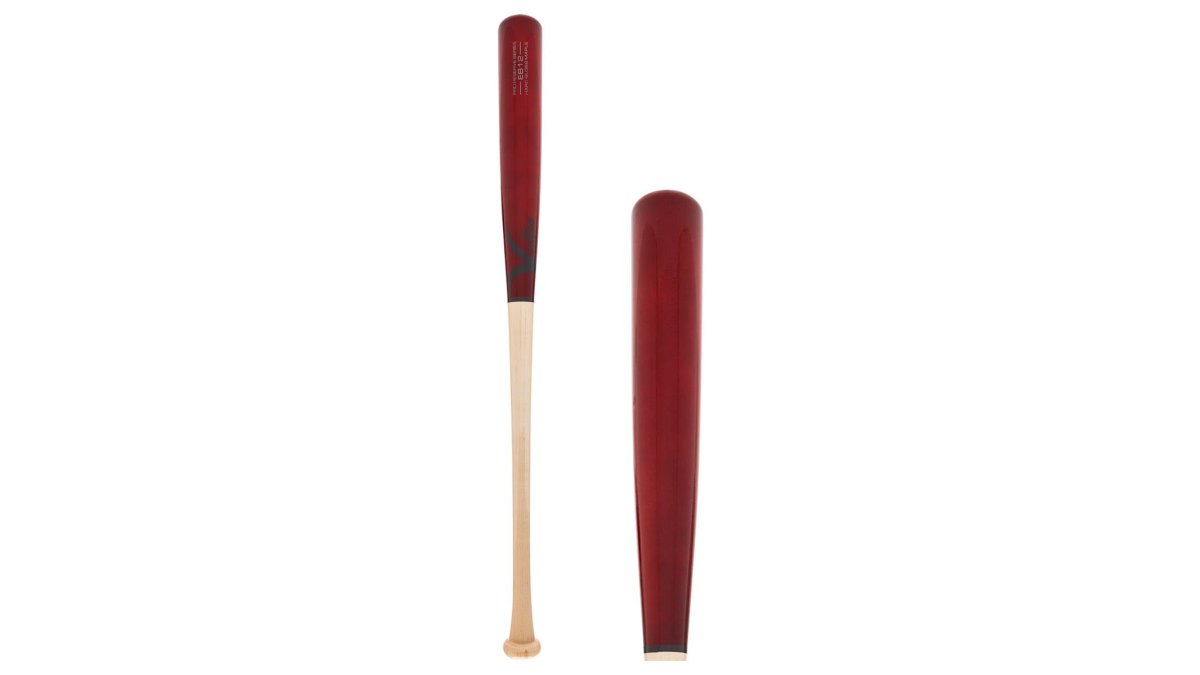
For a maple comparison point, the Victus EB12 Pro Reserve Hard Flat Maple Wood Baseball Bat shows what a dense, close-grain maple barrel feels like in the hands.

How Birch Fits Between Maple and Ash
Birch is the middle ground, and it's underrated. It carries a tighter grain structure than ash, so it feels stiffer without the full stiffness of hard maple. If you're unsure between maple and ash, birch is a reasonable starting point, it won't give you the extreme stiffness of maple or the extreme flex of ash, but it rarely feels wrong.
Here's how the three common bat woods compare on the traits that matter at the plate.
| Wood | Density and stiffness | Grain and failure | Best for |
|---|---|---|---|
| Hard maple | Densest of the three; stiff barrel resists deformation | Closed, tight grain; breaks cleanly, often at handle or taper | Power hitters wanting a stiff barrel and minimal flex |
| Ash | Less dense, more flexible along the grain | Open grain with visible growth rings; prone to flaking and splintering | Contact hitters wanting more whip and forgiveness |
| Birch | Between the two: stiffer than ash, not as stiff as maple | Tighter grain than ash; holds structure under repeated contact | Players wanting maple-like stiffness with slightly more give |
Reading a Wood Baseball Bat Size Chart
A wood bat size chart maps your height and weight to a starting length, usually from 28 to 34 inches. Treat it as a starting point, not a verdict. What most charts don't tell you is how to balance length against weight, swing weight, handle, and barrel once you're in the right neighborhood.
Step 1: Get a Base Length from the Chart
Find your height and weight on the chart to get a base length. Most charts are built for the average build at each height, so if you're heavier or stronger than average, you may need to size down; if you're lighter or quicker, you may be able to size up.
Step 2: Test the Swing at Game Speed
Stand in the box and take 10 dry swings at game speed. Check that the barrel reaches the far side of the plate without reaching, if you have to extend your arms fully to cover the outside corner, the bat is too long. Drop one inch if the swing feels slow or the barrel drags; add one inch if you're consistently early and the bat feels light. Buying for the player you hope to be next season is a common mistake, an oversized wood bat slows the swing and forces you to cast the barrel.
Step 3: Balance Length Against Weight
Length and weight are linked. In wood bats, adult models almost always land at minus-3, so a 33-inch bat weighs about 30 ounces. Add an inch and you add roughly an ounce. A longer bat gives more reach and a bigger barrel, but also more mass to accelerate. The right length is the longest bat you can swing at game speed without dragging the barrel.
Step 4: Understand Swing Weight
Swing weight is the more useful number, and it's the one nobody prints on the label. Two bats with the same drop can feel completely different depending on where the mass sits. An end-loaded bat puts more weight in the barrel and rewards a strong, late-accelerating swing; a balanced bat keeps mass closer to the hands and suits hitters who generate bat speed with quick hands.
Rawlings Ozzie Albies Pro Label Maple Wood Baseball Bat OA1PL →
Step 5: Match Handle and Barrel to Your Hands and Swing
Handle diameter and barrel size affect comfort and control. Thinner handles suit hitters who choke up or have smaller hands; thicker handles give more stability for larger hands or a stronger grip. A larger barrel offers more sweet spot but adds weight and slows the swing; a smaller barrel is lighter and quicker but less forgiving.
A Practical Sizing Checklist
- Base length from the chart
- 10 dry swings at game speed
- Barrel reaches the far side of the plate without full extension
Wood Bat Drop Weight and Swing Weight Explained
Drop weight is length in inches minus weight in ounces, and in wood baseball bats it almost always lands at minus-3 for adult models. That's not a limitation, it's a standard. Wood bats are built to the same length-to-weight ratio so that league rules stay consistent across manufacturers.
Bat Profiles: Barrel, Handle, Taper, and Knob
A bat profile describes the shape of the bat from knob to barrel end, and it's the most overlooked part of the buying decision. Two bats of identical length and wood can feel like completely different tools based on profile alone.
- Barrel diameter: Larger barrels offer more sweet spot but add weight and slow the swing
- Handle diameter: Thinner handles suit hitters who choke up or have smaller hands
- Taper: The transition zone; a longer taper shifts weight toward the barrel
If you want to see how a defined barrel, taper, and handle come together, the Marucci Gamer Black Maple Wood Baseball Bat MVEGMR-BK is a good study.

Stock Models vs Custom Turn Models
Stock models are turned to a fixed profile and ready to swing today. Custom turn models let you specify barrel size, handle thickness, and knob shape to match a profile you already trust. For most players, a stock model in the right wood and length is the smarter first purchase. Custom turns make sense once you know exactly what you like.
Rules by League and Age Group: Is a Wood Bat Legal?
Whether wood bats are legal depends on your specific league's rulebook, not a universal standard. The catch is that legality depends on your specific league's rulebook, not a universal standard.
Before you buy, check these three things with your league:
- Whether wood is permitted as a substitute for the approved bat standard
- Any barrel diameter or length-to-weight restrictions the league enforces
- Whether the league requires a specific certification mark on non-wood bats only
When in doubt, ask your coach or league director before you spend money on a bat you can't swing in a game.
Wood Bat Care and Maintenance That Prevents Breakage
Most wood bats don't fail because of bad wood. They fail because of where and how they're stored, and because players swing them in cold weather.
Follow this routine to get a full season out of a bat:
- Rotate the bat a quarter turn between swings so you don't pound one grain line
- Store it in a dry, temperature-stable spot, not a car trunk or garage
- Wipe it down after rain or heavy humidity and let it air dry fully
Watch out: hitting the cage with a game wood bat is the fastest way to shorten its life. Cage balls are dense, and the repeated impact stresses the grain in ways game swings don't.
Try a Wood Bat at Prime Sports Before You Buy
The best way to choose wood baseball bats is to hold them, swing them, and feel the balance in your own hands. Numbers on a chart only get you so far, feel doesn't transfer through a screen.
Prime Sports carries wood bats from Rawlings, Louisville Slugger, Victus, and Marucci, among others, and our team can help you compare options. If you're still narrowing down brands, our guide to bat brands for travel baseball is a useful next read before you commit.
Frequently Asked Questions
How do you choose the right size wood baseball bat?
Start with a wood baseball bat size chart that matches height and weight, then confirm by standing the bat beside the player: the knob should reach roughly mid-chest to the armpit. Length alone is not enough. Check that the player can swing the bat through the zone without the barrel dragging. Youth players often move down an inch when switching from composite to wood because the swing weight feels heavier.
What is the difference between maple and ash baseball bats?
Maple is denser and harder, so it produces a stiffer feel and less flex on contact. Ash has more flexibility and a visible grain pattern, which gives it a softer feel and a wider sweet spot on some profiles. Maple tends to suit strong hitters who want a hard barrel surface, while ash appeals to contact hitters who like feedback through the swing. Both are legal in most wood-bat leagues. The right pick depends on swing speed and how much flex you want.
How heavy should a wood baseball bat be?
Wood bats are usually sold at a drop 3 or drop 2, meaning the length in inches minus the weight in ounces. A 33-inch bat at drop 3 weighs 30 ounces. High school and adult players typically swing drop 3, while younger players may need a lighter drop to keep swing speed up. The wood bat drop weight matters more than the number on the label, because balance point changes how heavy the bat feels. Test the swing before buying.
How do you care for a wood baseball bat so it lasts longer?
Keep the bat out of extreme heat and never leave it in a car trunk. Rotate the barrel a quarter turn between swings in the cage so you do not pound one grain line. Wipe off dirt and moisture after use, and store the bat in a dry bag rather than on a damp dugout floor. Inspect the handle and taper for small cracks before every game. Wood bat care and maintenance is mostly about moisture control and spreading contact across the barrel.
Choosing the right wood bat comes down to matching species, length, and profile to the swing you actually have. That's a conversation, not a transaction. Get started with Prime Sports and find a wood bat that fits your swing, your league, and your season.
