


Baseball Glove Sizing Guide 2026
Table of Contents
- Understanding Baseball Glove Sizing Fundamentals
- Youth Baseball Glove Size Chart by Age
- Baseball Glove Size by Position
- How to Measure a Baseball Glove
- How Should a Baseball Glove Fit
- Sizing for Players Between Recommendations
- Softball Glove Sizing Compared to Baseball
- Frequently Asked Questions
Last Updated: October 10, 2026
Understanding Baseball Glove Sizing Fundamentals
Baseball glove sizing is the practice of matching a player's hand size, position, and age to the appropriate glove length measured in inches from the heel to the tip of the longest finger.
A glove that's too large forces overextension and slower transfers; too small restricts mobility and causes fatigue. The right size allows the pocket to form naturally, fingers to fill the stalls without bunching, and quick, confident plays.
Glove Size Measurement Standards
Glove manufacturers measure size from the heel to the tip of the longest finger. This measurement is the official size stamped on the glove's tag.
The standard size range spans from 10.5 inches (smallest youth) to 13.5 inches (largest adult outfield). Most youth and high school players use gloves between 10.75 and 12.75 inches. Measurements are consistent across brands, though pocket depth, webbing style, and break-in time vary.
Why Size Matters for Performance
An undersized glove jams fingers into the stalls, reducing mobility and creating fatigue. Transfers become slower because the hand can't move freely.
An oversized glove allows the hand to rattle around, reducing control and delaying response to ground balls and fly balls. The pocket may never form properly.
The ideal fit allows fingers to reach the end of the stalls with roughly a quarter-inch of room, the heel sits snug against the palm, and the wrist opening feels secure without cutting circulation.
Youth Baseball Glove Size Chart by Age
Age is a starting point, not a final answer. Hand size, strength, and position vary widely among young players. Use this chart as a baseline, then verify against the player's actual hand measurements and the specific position they'll play.
| Age Group | Position | Notes |
|---|---|---|
| T-Ball (4-6) | All positions | Lightweight leather preferred for young hands |
| Little League (7-8) | All positions | Pedroia Fit for smaller hands |
| Youth (9-12) | Infield/Utility | Position-specific sizing begins here |
| Youth (9-12) | Outfield | Deeper pockets for fly balls |
| Teen (13+) | Infield | Adult-sized performance gloves |
| Teen (13+) | Outfield | Full-size outfield range |
T-Ball Through Little League Ages 4-8
Young players aged 4-6 need gloves in the 10.5 to 11-inch range. Lightweight leather and shallow pockets matter more than advanced webbing patterns at this age.
Many players benefit from Pedroia Fit technology, which features a narrower wrist opening and shorter finger stalls for smaller hands.
By ages 7-8, glove size typically stays in the 11 to 11.5-inch range, though larger-handed players may move toward 12 inches. Ensure the player can control the glove and make plays.
Youth Players Ages 9-12
This is where position-specific sizing becomes important. Players are developing specialized skills and spending more time at their assigned positions.
For infield positions, glove sizes typically range from 11.5 to 12.25 inches. A shallower pocket enables faster transfers and quicker throws.

For outfield positions, sizes range from 12 to 12.75 inches. The deeper pocket and larger surface area help track fly balls and secure catches.
Catchers require specialized equipment.
Teen and High School Players Ages 13+
By high school, most players use adult-sized equipment. Infield gloves range from 11.5 to 12.25 inches; outfielders use 12.5 to 13.5 inches depending on position and hand size.
High school players often invest in premium gloves with advanced leather and webbing patterns. First-base players typically use mitts in the 12 to 12.75-inch range; catchers use 33 to 34-inch mitts.
At this level, hand size becomes as important as age.
Baseball Glove Size by Position
Position determines not just the glove size, but the pocket depth, webbing pattern, and overall design. A glove optimized for one position performs poorly in another.
Infield Glove Sizes and Patterns
Infield gloves range from 10.75 to 12.25 inches. The shallow pocket enables fast transfers, critical for turning double plays. H-Web or I-Web patterns create tight pockets without deep webbing that slows transfers.

Shortstops and second basemen typically prefer smaller gloves (11 to 11.5 inches) for maximum mobility. Third basemen often use slightly larger gloves (11.5 to 12 inches).
Outfield Glove Size Ranges
Outfield gloves range from 12 to 13.5 inches, with most players using 12.25 to 12.75 inches. The larger surface area helps track fly balls; the deeper pocket secures catches without popping out on impact.
Left fielders and center fielders often use slightly larger gloves (12.5 to 13 inches); right fielders may use 12 to 12.5 inches. Outfield glove pockets extend deeper into the palm, creating a basket-like shape.
Catcher's Mitt and First-Base Mitt Sizing
The catcher's mitt is measured by circumference (around the outside of the mitt) rather than length.
The first-base mitt is measured by length (like a glove) and typically ranges from 12 to 12.75 inches.
How to Measure a Baseball Glove
Accurate measurement is the foundation of proper sizing. A glove that measures correctly on paper might still fit poorly if the player's hand shape doesn't match the glove's design, but starting with the right measurement eliminates one major variable.
Step-by-Step Measurement Process
Place the glove on a flat surface with palm down and fingers extended. Measure from the heel to the tip of the longest finger.
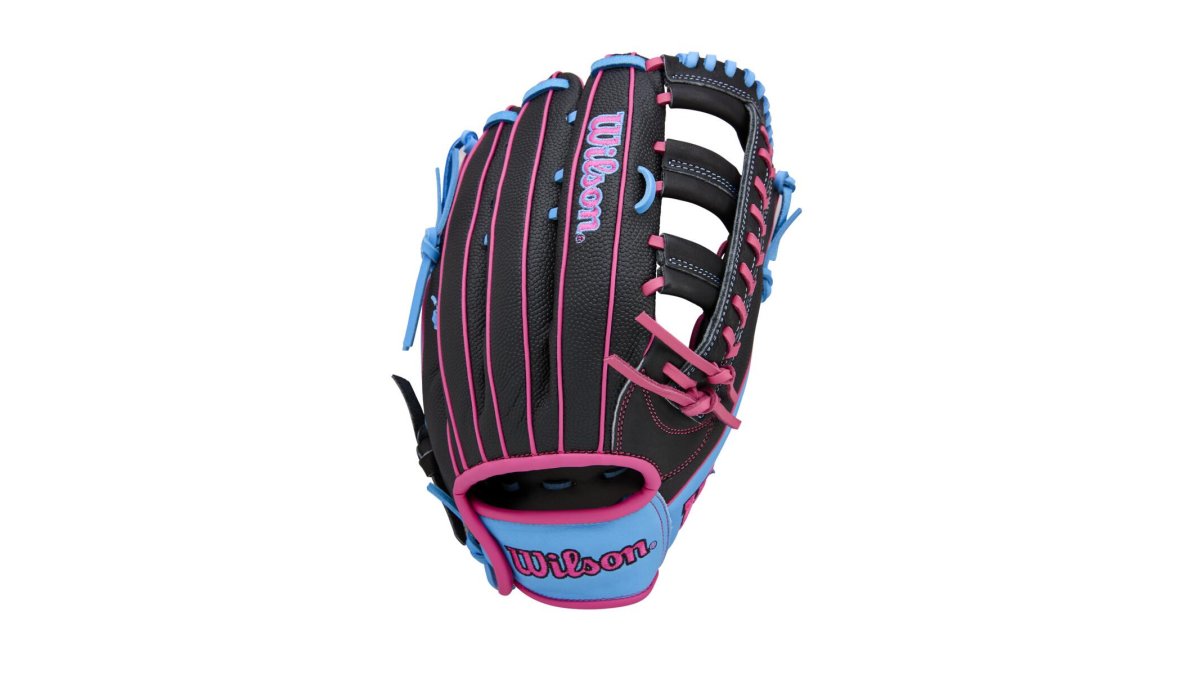
Wilson 2026 A1000 DP15 11.5" Baseball Glove WBW103956115 →
For a practical fit test, have the player close their hand into a fist. Fingers should reach the end of the stalls with roughly a quarter-inch of space.
Check the wrist opening by having the player slide their hand in and out.
Interpreting Glove Size Labels
The size printed on the glove's tag is the official measurement from heel to fingertip.
Break-in affects perceived size. A new glove feels slightly tighter than after 10 hours of use, as the leather softens and molds to the hand.
Some manufacturers offer Pedroia Fit or similar technologies that reduce the wrist opening and shorten finger stalls for smaller hands. Verify the fit rather than relying solely on the size label.
How Should a Baseball Glove Fit
The ideal fit balances snugness and mobility. Too tight and the player's hand fatigues; too loose and the player loses control. The fit also changes as the glove breaks in, so initial feel isn't the final verdict.
Hand Size and Dexterity Considerations
Hand size varies widely among players of the same age. Measure the player's hand and try on the glove to determine the right size.
Measure hand size from the wrist crease to the tip of the middle finger.
A young player with developing hand strength may struggle with stiff leather; a player with strong hands may prefer a stiffer glove. Full-grain leather breaks in faster than synthetic, making it better for younger players.
The Break-In Period and Fit Changes
A new glove is stiff and tight. Over 10-20 hours of use, the leather softens and molds to the player's hand.
During break-in, the glove will feel slightly looser as the leather stretches. A glove that feels snug initially may be perfect by week three.
Accelerate break-in by using the glove in practice. Catch ground balls and fly balls repeatedly. Avoid soaking the glove in water or using oil-based conditioners.
Sizing for Players Between Recommendations
Many players fall between standard size recommendations. These in-between cases require judgment beyond the chart.
Measure the player's hand and compare it to the size range for their age.
Some gloves run larger or smaller than official size. Reading reviews and trying on multiple brands helps identify which models work best for the player's hand shape.
Prioritize fit over size. A properly fitting glove enables faster player development, regardless of whether it matches the standard recommendation.
Softball Glove Sizing Compared to Baseball
Softball catcher's mitts are similar in size to baseball mitts but often have additional padding.
When transitioning from baseball to softball, expect to size up or down by roughly 0.5 inches.
Finding the right glove size is critical, yet many parents approach it with guesswork.
At Prime Sports, we stock many youth and adult baseball and softball gloves from brands like Wilson, Rawlings, and Easton.
Frequently Asked Questions
What size baseball glove should a 7-year-old use?
Most 7-year-olds play in Little League and benefit from a glove between 10 and 10.75 inches. At this age, hand size varies significantly, so it's important to have your child try on gloves before purchasing. A glove that's too large makes it difficult for young players to close and control, while one that's too small restricts hand development and comfort. The Wilson A1000 DP15 at 11.5 inches works well for infielders in this age group who have slightly larger hands or are growing quickly.
How do you measure a baseball glove?
To measure a baseball glove, place it flat on a table with the palm facing up. Using a ruler or measuring tape, measure from the heel of the glove (bottom of the palm area) to the tip of the longest finger. This measurement in inches is the glove's size. Most baseball gloves range from 10.5 to 13 inches, with catcher's mitts measured differently at around 33 inches. Always measure the glove itself, not your hand, when determining what size to purchase.
What size baseball glove do I need for my position?
Infielders typically use 10.75 to 11.5-inch gloves for quick transfers and ball control. Outfielders need larger gloves, usually 12 to 12.75 inches, to reach fly balls. Pitchers often prefer 11.5 to 12-inch gloves for balance between control and reach. Catchers use specialized mitts around 33 inches, while first basemen use single-break mitts at 12 to 12.5 inches. Your specific position and hand size both influence the best choice for your playing style.
How should a baseball glove fit?
A properly fitting glove should feel snug around your hand and wrist without cutting off circulation. Your fingers should touch the end of the glove's finger stalls without excessive pressure, and you should be able to close the glove smoothly with your throwing hand. The heel of your hand should sit comfortably in the heel pocket, and the wrist opening should be secure but not restrictive. A new glove will feel stiff; expect 10-20 hours of use before it breaks in and conforms to your hand shape.
Can a baseball glove be too big?
Yes. A glove that's too large makes it difficult to close quickly, slows your reaction time, and prevents proper ball control. Young players especially struggle with oversized gloves because they lack the hand strength to manage the extra leather. While you might think buying a larger glove for your child to grow into saves money, it often leads to frustration, poor mechanics, and missed plays. Choose a glove that fits your current hand size and playing level.
What size baseball glove is best for a beginner?
Beginners benefit from properly sized gloves that match their age and hand measurements rather than oversized options. A well-fitted glove builds confidence and helps develop proper fielding technique. For youth beginners, 10 to 10.75-inch infield gloves offer good control and quick ball transfer. As beginners progress and their hands grow, they can move to larger gloves suited to their position. Starting with the right size prevents the frustration of struggling with equipment that doesn't fit.
What's the difference between youth and adult baseball gloves?
Youth gloves are smaller overall and often feature technology like Pedroia Fit, which includes narrower wrist openings and shorter finger stalls to accommodate smaller hands. Adult gloves use full-size measurements and standard finger proportions. Youth gloves break in faster due to softer leather and lighter construction, while adult gloves prioritize durability and performance at higher competitive levels. The Wilson A1000 series offers both youth and adult options designed specifically for each player development stage.