


Youth Softball Bat Sizing Guide 2026: Find the Right Fit
Table of Contents
- How to Measure for a Softball Bat
- Youth Softball Bat Drop Weight Explained
- USA Softball Bat Certification 2026: What Parents Must Check
- Composite vs. Alloy: Which Youth Softball Bat Fits Your Player?
- Transitioning Between Age Brackets and Bat Sizes
- Common Youth Softball Bat Sizing Mistakes to Avoid
- Conclusion
- Frequently Asked Questions
Last Updated: October 2, 2026
How to Measure for a Softball Bat
Getting the right youth softball bat sizing guide 2026 starts with one number most parents never check.
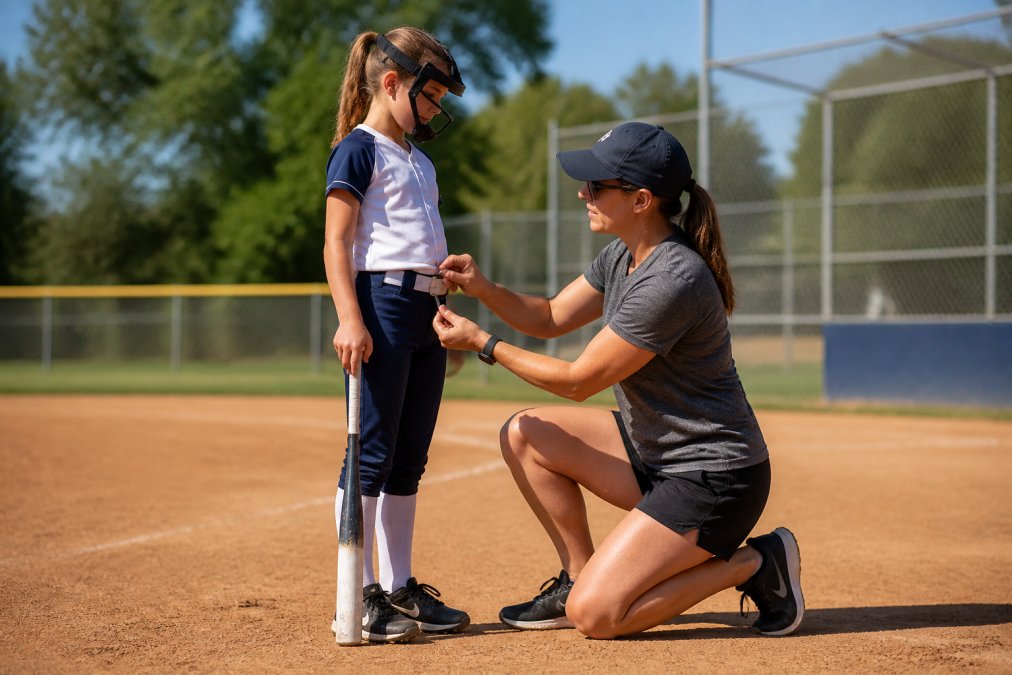
The Arm Reach Test
The arm reach test is the fastest way to confirm bat length without a tape. Have your player stand tall, arm straight down, bat held by the knob against her leg. A bat that fits rests the knob near the center of her palm at hip level. If the knob sits at her fingertips, it is too long; if it swallows her palm past the wrist, it is too short.
Height and Weight Charts
Height and weight charts give you a starting range, not a verdict. A player who is 52 inches tall typically lands between a 29-inch and 31-inch bat, but her build changes that window. A heavier, stronger player can handle more length than a lean player of the same height.
| Player Height | Starting Bat Length | Typical Drop Range |
|---|---|---|
| Under 40 in | 24-26 in | -13 to -12 |
| 40-44 in | 26-28 in | -13 to -12 |
| 45-49 in | 28-29 in | -12 to -11 |
| 50-54 in | 29-31 in | -12 to -10 |
| 55-59 in | 31-32 in | -11 to -10 |
| 60 in and up | 32-34 in | -10 to -9 |
Youth Softball Bat Drop Weight Explained
Drop weight is the difference between a bat's length in inches and its weight in ounces, written as a negative number. A 30-inch bat weighing 19 ounces carries a -11 drop. The higher the drop number, the lighter the bat and the easier it is for a young player to swing fast.
Balanced vs. End-Loaded Bats
Balanced bats distribute weight evenly through the barrel and handle. End-loaded bats push mass toward the sweet spot for more power, but demand more bat speed through the zone. For most youth fastpitch players under 12, a balanced profile delivers better control and a shorter path to contact.
USA Softball Bat Certification 2026: What Parents Must Check
USA Softball bat certification 2026 requires a permanent stamp on the taper or handle showing the bat meets the current performance standard. No stamp, no play. Umpires check before the first pitch, and an uncertified bat goes back to the car.
How to Verify a Bat Before You Buy
Certification is not a one-time decision. Models get added and removed from approved lists every season, and a bat legal last spring can be banned by fall. Three checks take under five minutes:
- Find the stamp physically on the bat. It should be permanent, etched, stamped, or molded into the taper or handle, not a sticker. Stickers peel, and a missing stamp is a missing stamp to an umpire.
- Match the model number, not just the brand. Two bats from the same line can carry different stamps. The model number on the barrel is what the approved list references.
- Cross-check the current approved list. The USA Softball official bat certification standards page lists current approved models, and it is worth a two-minute check before checkout. Do this even if you are buying the same bat your player swung last year.
USSSA, NSA, and ISA Stamps
Different leagues accept different stamps, and a bat legal in one sanctioning body may be banned in another. Ask your league director which stamps your division requires.
A quick reference on what each stamp covers:
- USA Softball: Required for most youth recreational and travel fastpitch leagues. The stamp reflects testing against the USA Softball performance standard.
- USSSA: Common for travel tournaments; USSSA-stamped bats often carry a different performance limit, and USSSA maintains its own approved bat list separate from USA Softball's.
- NSA and ISA: Accepted in specific regional and national tournament circuits. If your team plays a mixed schedule, check every sanctioning body your tournament director names.
What Happens If You Bring the Wrong Bat
Most umpires check bats at the plate meeting or before the first pitch. An uncertified or banned bat is removed from play. The fix is simple: keep a photo of the bat's stamp and model number on your phone and confirm it against your league's current list before the season opener.
Composite vs. Alloy: Which Youth Softball Bat Fits Your Player?
Composite bats are built from layered carbon fiber, which lets manufacturers tune the barrel for a larger sweet spot and better vibration dampening. Alloy bats are one-piece aluminum, durable and budget-friendly, but with a smaller sweet spot and a stiffer feel on mishits.
| Feature | Composite | Alloy |
|---|---|---|
| Sweet spot size | Larger | Smaller |
| Break-in period | 150-200 swings | None |
| Vibration on mishits | Dampened | Transmitted to hands |
| Durability in cold weather | Lower | Higher |
| Price range | Higher | Lower |
The Part Most Guides Skip: How Material Changes the Swing
Material is not just a durability or price decision. It changes how the bat moves through the zone, and that shows up in a young player's mechanics long before the box score.
Rawlings 2025 Eclipse -12 Fastpitch Bat →
Grip and Knob Style: The Sizing Detail Nobody Mentions
Modern bats ship with varied grip thicknesses and knob designs, and both change how the bat sits in a player's hands. A thicker grip shortens a player's reach to the knob, making a bat that measured correctly at the rack feel a half-inch too long in the box. A flared or tapered knob does the opposite, giving a smaller hand a more secure anchor point.
Matching Material to the Player, Not the Hype
For a first travel-ball bat, the Rawlings 2025 Eclipse -12 Fastpitch Bat gives younger players an X-tended sweet spot that widens the barrel without adding weight. For an elite slapper moving up, the Louisville Slugger 2026 Kryo -11 Fastpitch Bat pairs a composite gapped wall design with a lighter swing weight in the shorter lengths.

Transitioning Between Age Brackets and Bat Sizes
Moving from 10U to 12U, or 12U to 14U, usually means a jump in bat length and a drop in drop weight. The mistake is making both changes at once. A player who goes from a 29-inch -12 to a 32-inch -10 has added three inches and four ounces in one purchase, and her timing will fall apart for weeks.
Common Youth Softball Bat Sizing Mistakes to Avoid
The most expensive mistake in youth softball bat sizing is buying for the player your daughter will be in two years. Here are the errors we correct most often.
- Sizing by age alone. A 12-year-old who is 4-foot-10 and one who is 5-foot-6 need different bats, same birthday.
- Ignoring grip and knob style. A thicker grip or a flared knob changes how the bat sits in the hands and can shorten a player's effective reach.
- Overlooking swing weight. Two bats with identical length and drop can feel completely different because of where the mass sits in the barrel.
- Skipping the certification check. Buying a bat that is not legal in your league wastes the money outright.
- Buying composite for a player who will not break it in. Without those 150-200 swings, she never gets the performance she paid for.
Conclusion
The right bat is the one your player can control through the zone, not the one with the biggest barrel or highest price tag. Start with the arm reach test, confirm the length against a height and weight chart, then check the certification stamp your league requires. From there, match the material and drop weight to how she actually swings.
Frequently Asked Questions
How do I determine the correct softball bat length for my child?
Start with the arm reach test: have your player stand a bat head-down at her side. The knob should sit at her hip crease. If it reaches her waist, the bat is too long; if it sits above the hip, it is too short. Then cross-check her height and weight against a sizing chart. Most 7-year-olds fit a 26 to 28 inch bat, and a 10-year-old typically needs a 29 to 31 inch bat. Always verify with a few dry swings in person, since comfort and bat control matter as much as the chart.
What is the difference between drop weight and bat length?
Bat length is measured in inches from the knob to the end of the barrel. Drop weight is the difference between the bat's length in inches and its weight in ounces, shown as a negative number. A 30-inch bat that weighs 20 ounces has a -10 drop. A higher drop (like -12) means a lighter bat that is easier for younger players to swing. A lower drop (like -10) means more mass for power. Both numbers work together to define how the bat feels in a player's hands.
Are there specific USA Softball certification requirements for 2026 bats?
Yes. Bats used in USA Softball sanctioned play must carry the USA Softball certification stamp and meet the 98 mph batted-ball speed standard. For 2026, no new certification changes have been announced, but always check the stamp on the taper. If your league plays under USSSA, NSA, or ISA rules, the bat needs the corresponding stamp for that sanctioning body. A bat certified for one league may not be legal in another, so confirm your league's rules before buying.
Is a 28-inch bat too big for a 7-year-old?
It depends on the player's height and weight. A 28-inch bat can work for a taller or stronger 7-year-old, but most players that age fit a 26 to 27 inch bat. A bat that is too long throws off swing mechanics and reduces bat control. Run the arm reach test and compare your child's measurements to a sizing chart. If she cannot swing the bat smoothly through the zone without dragging the barrel, drop down an inch or two.
What are the most common mistakes parents make when buying a youth softball bat?
The biggest mistake is buying for the player she will be next season rather than the player she is now. An oversized bat hurts swing mechanics and confidence. Second is ignoring certification stamps, which can make a bat illegal for league play. Third is choosing a bat based only on color or brand instead of testing the swing weight in person. Bring your player to the store, have her take dry swings with two or three options, and pick the one she can control through the zone.
When should a youth player transition to a heavier bat?
Move up in drop weight when the player consistently squares up pitches and finishes her swing with balance and no drag. If she is late on fast pitching or her hands drop, the bat is too heavy. Most players transition from a -12 to a -11 or -10 around age 10 to 12, but the right time depends on her strength and swing mechanics, not her birthday. A bat that is too heavy too early can undo months of swing work.
How does a player's height and weight affect bat selection?
Height determines the starting range for bat length. Weight indicates how much mass the player can control. A taller, lighter player may need a longer bat with a higher drop weight to keep it light enough to swing. A shorter, heavier player may fit a shorter bat with a lower drop for more power. Use a height and weight chart to find the overlap, then fine-tune with the arm reach test and live swings.