

What Baseball Equipment Do Youth Players Need?
Last Updated: October 25, 2026
Quick Summary
Youth baseball equipment includes a bat, glove, batting helmet, cleats, pants, athletic cup, batting gloves, socks, undershirt, bag, baseballs, and batting tee. The right youth baseball equipment keeps your child safe, comfortable, and confident at the plate and in the field. Invest in quality where it matters most: safety gear and proper fit for performance.
- Youth baseball gloves range from 10.5 to 12.5 inches depending on position, with infield gloves at 10.5-11.5 inches and outfield gloves at 12-12.5 inches.
- Starter rec league equipment costs $150-$275, mid-range travel gear runs $300-$500, and upgrade select equipment ranges $500-$800 or more.
- Most youth leagues require bats to carry either a USA Baseball mark or USSSA 1.15 BPF stamp, and requirements vary by league so confirm before purchasing.
- Catcher's gear must include a NOCSAE-certified helmet with face mask, chest protector, and leg guards, with many leagues also requiring a throat guard.
Table of Contents
- Essential Youth Baseball Equipment Checklist
- Youth Baseball Bat Size Chart and Selection Guide
- Youth Baseball Glove Size Chart and Fit
- Youth Baseball Catcher Gear: Protection Behind the Plate
- Protective Gear, Cleats, and Game-Day Apparel
- Baseball Practice Bag Checklist and Storage
- Budget Tiers, League Rules, and Gear Replacement
- Building Your Youth Player's Gear Collection
- Frequently Asked Questions
Essential Youth Baseball Equipment Checklist
The right youth baseball equipment keeps your child safe, comfortable, and confident at the plate and in the field.
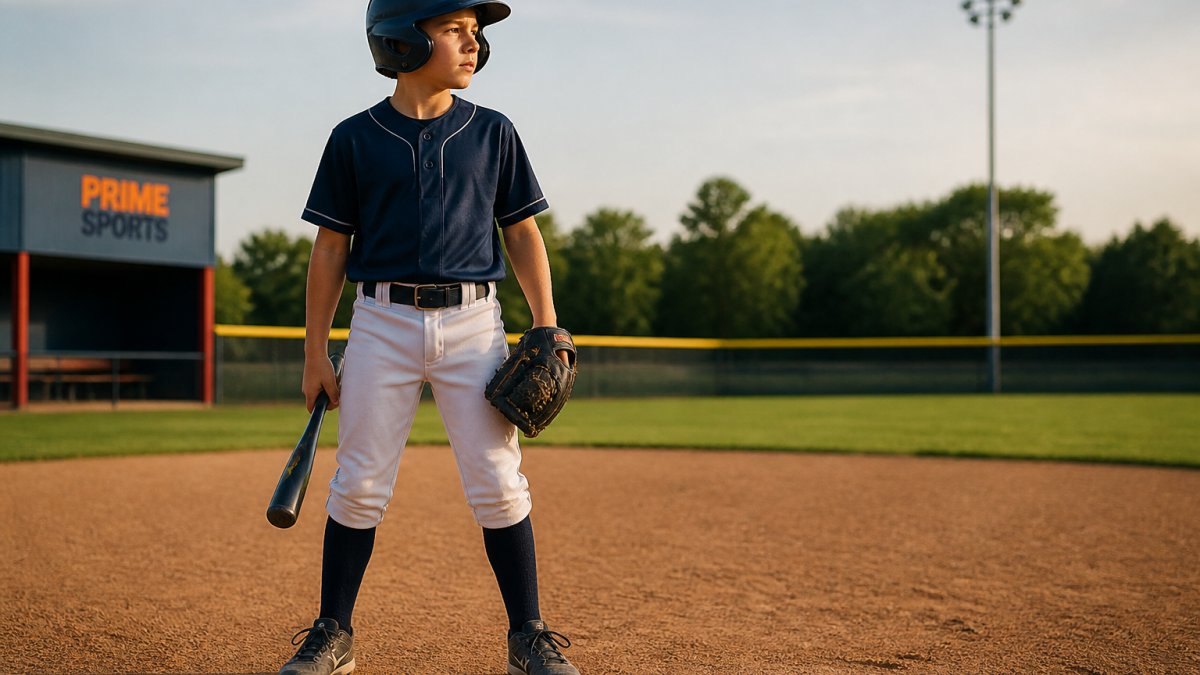
Here's what every young player needs to get started:
- Baseball bat (appropriate size and weight for age)
- Baseball glove (sized for position and hand)
- Batting helmet (NOCSAE certified)
- Baseball cleats (molded or metal studs, league-dependent)
- Baseball pants (knee-high or full-length)
- Athletic cup and supporter (essential protective gear)
- Batting gloves (for grip and comfort)
- Baseball socks (long, to cover shin area)
- Undershirt or base layer (moisture-wicking preferred)
- Baseball bag (to transport and organize equipment)
- Baseballs (for practice)
- Batting tee (for practice drills)
At Prime Sports, we help parents focus on what matters for each player's age and position.
Many parents buy oversized gear thinking their child will "grow into it," which creates safety hazards and poor performance. Youth baseball equipment is engineered for younger bodies, so use it.
Youth Baseball Bat Size Chart and Selection Guide
The right bat improves swing mechanics and confidence. Too heavy slows the swing and causes poor form; too light doesn't generate enough power.
Bat size is determined by two factors: length and weight.
Length is measured in inches from knob to barrel end; weight in ounces.
For youth players, follow these general guidelines:
| Age Group | Height Range | Recommended Bat Length | Recommended Bat Drop |
|---|---|---|---|
| 5-7 years | 3'0" - 3'8" | 24-26 inches | -12 to -13 |
| 8-9 years | 3'8" - 4'2" | 26-28 inches | -11 to -12 |
| 10-11 years | 4'2" - 4'8" | 28-30 inches | -10 to -11 |
| 12-13 years | 4'8" - 5'2" | 30-32 inches | -8 to -10 |
| 14+ years | 5'2"+ | 32-34 inches | -5 to -8 |
Stood upright next to your child, the bat should reach roughly mid-shin.
Most youth leagues require bats to carry a USSSA or USA Baseball stamp. The Rawlings 2024 Clout USSSA Baseball Bat is a popular choice for young hitters seeking balanced swing weight and consistent performance.
Weight matters more than length.
Youth Baseball Glove Size Chart and Fit
A properly fitted glove matters as much as the bat.
Glove size is measured in inches across the palm. Youth gloves typically range from 10.5 to 12.5 inches depending on age and position.
| Position | Glove Size | Best For |
|---|---|---|
| Infield (shortstop, second base, third base) | 10.5 - 11.5 inches | Quicker transfers, better control |
| Outfield | 12 - 12.5 inches | Larger pocket for fly balls |
| Pitcher | 11.5 - 12 inches | Balanced pocket design |
| First Base | 12 - 13 inches | Wider pocket for scoops |
The glove should fit snugly around the wrist with the strap fastened.
For young players just starting out, the Sure Catch Baseball Glove offers an 11-inch infield/outfield option with a quick-close design that makes it easier for beginners to secure catches. The Wilson 2025 A500 Red/Blue/White 11.50" Baseball Glove delivers full leather construction that breaks in quickly and performs across multiple positions.
Leather gloves need 20-40 hours of break-in before they feel game-ready. Let your child use the glove in practice for several weeks and apply glove oil periodically.
Youth Baseball Catcher Gear: Protection Behind the Plate
Catching is the most physically demanding position in baseball, absorbing foul balls, wild pitches, and constant impact.
A complete catcher's gear set includes: helmet with face mask, chest protector, and leg guards. All pieces must work together to provide full coverage.
The Wilson C200 YOUTH CATCHER'S GEAR KIT includes a NOCSAE-certified helmet with a premium ABS shell, a high-density foam chest protector with an over-the-shoulder harness, and lightweight leg guards with adjustable metal buckles.
Fit is critical: the chest protector should sit flat without gaps, and leg guards should allow a comfortable crouch.
Protective Gear, Cleats, and Game-Day Apparel
Beyond the core equipment, several protective items complete a youth player's gear collection.
Batting gloves improve grip and reduce hand fatigue.
Athletic cup and supporter are essential for all infielders and catchers.
Baseball cleats provide traction on grass and dirt.
Wilson C200 YOUTH CATCHER'S GEAR KIT →
Baseball pants should fit at the knee or extend to the ankle.
Undershirts (base layers) keep players comfortable and manage moisture.
Baseball Practice Bag Checklist and Storage
A dedicated baseball bag keeps equipment organized, protects your investment, and teaches responsibility. Pack by scenario, practice, game day, and position.
Printable checklists by scenario
Practice bag (pack the night before):
- Bat (in bat sleeve)
- Glove
- Cleats
Game-day bag (add to practice bag):
- Team uniform jersey and pants
- Belt
- Long game socks
Position add-ons:
- Catcher: catcher's helmet/mask, chest protector, leg guards, throat guard, catcher's mitt
- First base: first-base mitt
- Pitcher: rosin bag if league allows, backup cap
Bag features worth paying for
- Dedicated bat sleeve, keeps the barrel from knocking against cleats and helmets.
- Vented shoe compartment, separates dirty cleats from clean uniforms.
- Fence hook, hangs the bag off a chain-link fence instead of the muddy ground.
Storage and care between games
Store equipment in a cool, dry place. Hang or lay leather gloves flat, store bats upright or horizontally, and air-dry gear completely after rain or heavy sweat to prevent mold.
A simple post-practice routine, unpack, wipe the glove, air out cleats and helmet, repack the night before, extends equipment lifespan and prevents odor. Keep spare socks and an undershirt in the bag so a wet game doesn't sideline the next one.
Budget Tiers, League Rules, and Gear Replacement
Youth baseball equipment costs vary widely by brand, quality, and position. Budget tiers help you prioritize spending so a first season doesn't become a $600 surprise.
Three realistic budget tiers
Prices below are typical U.S. retail ranges for youth gear; sales, closeouts, and team discounts can move them meaningfully.
| Tier | Total outlay | What it covers | Where to spend |
|---|---|---|---|
| Starter / rec league | $150-$275 | Bat, glove, helmet, cleats, pants, socks, cup, belt, bag | Helmet and cup (safety), glove fit |
| Mid-range travel | $300-$500 | Upgraded bat, better leather glove, catcher's set if needed, batting gloves | Bat certification match, glove break-in quality |
| Upgrade / select | $500-$800+ | Composite or alloy bat, premium glove, full catcher's kit, second pair of cleats | Position-specific gear, backup bat |
Rough per-item ranges to sanity-check a cart:
- Bat: $40-$80 entry alloy; $100-$200 mid; $250-$400+ premium composite
- Glove: $30-$60 youth synthetic; $70-$130 leather; $150+ premium leather
- Batting helmet: $30-$60 NOCSAE-certified; $70-$120 with face guard
A practical priority order for first-time families: helmet → cup → glove → cleats → bat → pants/socks → bag → practice extras. Safety first, performance second, convenience last.
League rules and equipment standards to confirm before buying
Requirements vary by league and division, so confirm with the coach or league handbook before checkout. Most commonly regulated:
- Bats: Most youth leagues require either a USA Baseball mark or a USSSA 1.15 BPF stamp, and many divisions ban one or the other. Barrel diameter (2 1/4" vs. 2 5/8") and length-to-weight drop limits also vary. A bat legal in one league can be illegal in another.
- Helmets: Look for the NOCSAE stamp (often "NOCSAE DOC" with a model number) molded into the shell. Many leagues require a face guard or chin strap for younger divisions.
- Catcher's gear: NOCSAE-certified chest protector and helmet with mask are standard requirements; some leagues also mandate a throat guard.
When to replace gear
- Helmet: Replace after any significant impact, if the shell is cracked or the padding is compressed, or per the manufacturer's age guidance (often five years from the date stamp).
- Bat: Replace on a crack, dent, or rattle; composite bats also lose performance over time even without visible damage.
- Glove: Re-lace as needed; replace when the leather is torn through or the pocket no longer holds shape.
Many families borrow or buy used gear for the first season, then upgrade once the child commits, keeping the initial outlay near the low end of the starter tier.
Building Your Youth Player's Gear Collection
Start with the essentials: bat, glove, helmet, cleats, and protective gear. Add other items as your child develops skills and your league provides guidance.
Prime Sports helps parents with expert guidance on sizing, brand selection, and league compliance.
Whether outfitting your first player or your fifth, the principle is the same: invest in quality where it matters most (safety and performance), measure carefully for fit, and verify league requirements before purchasing.
According to USA Baseball equipment standards, proper gear selection reduces injury risk and improves player development.
Frequently Asked Questions
What equipment does a child need to play youth baseball?
The core youth baseball equipment includes a bat, glove, batting helmet, cleats, athletic cup, and team uniform. Catchers also need a helmet, chest protector, and leg guards. Most leagues require helmets and protective gear for safety. Bats must meet USA Bat or USSSA certification standards depending on your league. Many teams provide practice balls and bases, so confirm with your coach what you need to purchase versus what the team supplies.
How do I choose the right youth baseball bat size?
Bat sizing depends on your child's height and weight. The drop weight (difference between length in inches and weight in ounces) typically ranges from -10 to -13 for youth players. A common rule: your child should be able to hold the bat at arm's length with their fingers just touching the knob. Most youth bats are 26-32 inches long. Check the USA Bat or USSSA stamp on the barrel to confirm league certification. Bats like the Rawlings Clout USSSA at $99.99 offer quality construction for competitive play.
What size baseball glove should my youth player wear?
Youth baseball glove sizes range from 10.5 to 12 inches, depending on age and position. Ages 4-6 typically use 10.5 inches; ages 7-9 use 11-11.5 inches; ages 10-12 use 11.5-12 inches. Infielders often prefer smaller gloves for quick ball transfer, while outfielders use larger gloves for reach. The glove should fit snugly with the heel of your child's hand at the heel pocket. Models like the Rawlings Sure Catch 11-inch at $44.99 or Wilson A500 11.5-inch at $74.95 are game-ready for youth players.
Do youth catchers need special protective gear?
Yes. Youth catchers must wear a NOCSAE-certified helmet, chest protector with built-in guard, and leg guards. These are non-negotiable for safety behind home plate. The Wilson C200 Youth Catcher's Gear Kit ($279.95) and Wilson EZ Gear 2.0 ($179.95) both meet NOCSAE standards and include all three pieces. The EZ Gear 2.0 features QuickChange technology for easy on-and-off between innings, making it practical for younger catchers still learning the position.
What should I pack in my child's baseball practice bag?
Include the bat, glove, helmet, cleats, athletic cup, batting gloves, and a water bottle. Add a towel, extra socks, sunscreen, and a change of clothes for after practice. If your child plays catcher, store the full gear kit in a padded bag to protect the helmet and chest protector. Label everything with your child's name, and store the bag in a cool, dry place to extend equipment life.
What league rules govern youth baseball equipment?
Most youth leagues follow USA Baseball or USSSA rules. Bats must display the USA Bat or USSSA stamp on the barrel. Helmets must meet NOCSAE standards. Cleats can be metal or molded rubber depending on age and league, check your league's rules before purchasing. Uniforms typically include a jersey, pants, socks, and cap provided or approved by the team. Catcher's gear must include NOCSAE-certified protection. Confirm your specific league's rulebook before buying equipment to avoid purchasing items that don't meet requirements.
How much should parents budget for youth baseball equipment?
A basic starter kit runs $250-$400: bat ($80-$150), glove ($40-$100), helmet ($30-$50), cleats ($50-$80), and protective gear ($50-$100). If your child plays catcher, add $180-$280 for full catcher's gear. Used equipment and borrowing from teammates can reduce costs. Many teams provide practice balls, bases, and some apparel. Budget an extra $100-$150 annually for replacement items like worn gloves or broken bats. Buying quality gear upfront from trusted brands often lasts multiple seasons, improving long-term value.
Finding the right youth baseball equipment doesn't require guesswork. Prime Sports combines a wide selection of professional-grade gear from trusted brands with personalized guidance to match each player's needs. Whether you're building a starter collection or upgrading for competitive play, our team helps you select equipment that fits properly, meets league requirements, and supports your child's development. Shop new arrivals and get expert recommendations at PrimeSportsMW.com.
