


Top Rated Baseball Cleats for Kids: A Buying Guide
Table of Contents
- What Makes the Best Baseball Cleats for Kids
- How Should Baseball Cleats Fit Your Young Player
- Kids Molded Baseball Cleats vs. Metal Cleats
- Youth Baseball Turf Shoes and Artificial Surfaces
- Baseball Cleats vs. Soccer Cleats: Key Differences
- Essential Features: Traction, Comfort, and Durability
- Sizing for Growth and Avoiding Common Fit Mistakes
- Recommended Youth Baseball Cleats and Where to Buy
- Frequently Asked Questions
Last Updated: October 12, 2026
What Makes the Best Baseball Cleats for Kids
Choosing the right baseball cleats for kids isn't about picking the most colorful pair. The best baseball cleats for kids balance traction, comfort, durability, and fit, while accounting for growing feet and league rules. At Prime Sports, we help young athletes find footwear that keeps them stable, prevents injuries, and gets worn season after season.
Start by understanding what your player needs. A shortstop needs lateral quickness and ankle stability; an outfielder prioritizes speed; a pitcher wants a stable base for balance and power transfer. Youth baseball cleats for kids must support all these needs while staying light enough that young legs don't fatigue quickly.
Surface matters too. Grass, dirt infields, and artificial turf each require different traction. A cleat that grips perfectly on grass can slip dangerously on turf, yet many parents buy one pair and hope it works everywhere.
How Should Baseball Cleats Fit Your Young Player
How should baseball cleats fit your young player? A proper fit means the heel stays locked without slipping, the midfoot feels snug but not constricting, and there's roughly a thumb's width between the longest toe and the cleat's end.
Growing feet complicate everything. Buy too small and you're back in the store in three months; buy too large and your player slides around, loses control, and risks blisters or ankle rolls.
Have your child wear their actual game socks when trying on cleats. Baseball socks are thicker than regular socks, so a cleat that feels perfect in thin dress socks will feel cramped with proper athletic socks.
Check the fit in the afternoon or evening, when feet are slightly swollen, for a more realistic sense of game-day feel.
Kids Molded Baseball Cleats vs. Metal Cleats
Molded cleats have fixed rubber or TPU studs attached to the outsole; metal cleats use replaceable metal spikes that screw into the base. Each serves different purposes with distinct trade-offs.
When Molded Cleats Are the Right Choice
Molded cleats are the standard for most youth players. They're safer because fixed studs can't catch on grass or dig too deep, and they're more forgiving on artificial turf, where metal spikes can catch and twist an ankle.
Molded cleats are lighter, reducing fatigue, and more affordable with no maintenance, no cleaning spikes, replacing studs, or worrying about rust.
The Phenom Elite Scooby-Doo Youth Cleats, Velocity 3.0 exemplifies effective molded cleats for young players. At 7.5 oz, these low-cut cleats feature SprintSense™ TPU traction plates for explosive acceleration and lateral quickness on natural grass and field turf, ideal for speed-driven athletes.

For most players under age 12, molded cleats are the better choice. They're safer, lighter, and sufficient for the traction demands of youth baseball.
When Metal Cleats Become an Option
Metal cleats enter the picture around age 13 or 14, depending on league rules and skill level. Metal spikes dig deeper into grass for superior traction and stability, and competitive travel and high school programs often allow them because athletes have developed better body awareness and ankle strength.
Metal cleats require more care: clean spikes after each game to prevent rust and mud buildup, and replace worn spikes periodically. On artificial turf they can catch and increase injury risk, so many fields prohibit them.
Youth Baseball Turf Shoes and Artificial Surfaces
Youth baseball turf shoes are designed for artificial surfaces. Instead of studs or spikes, they have dense rubber nubs across the outsole, providing traction without catching on synthetic fibers.
Many youth leagues use artificial turf because it's durable and plays consistently. But turf demands different footwear: molded cleats work but aren't ideal, metal cleats are dangerous and often prohibited, and turf shoes are the proper solution.
Turf shoes offer excellent multidirectional grip without the catch-and-twist risk of spikes. They're lighter than metal cleats, more durable than standard molded cleats, and often more comfortable for sustained play.
If your player's league uses artificial turf regularly, investing in a dedicated turf shoe makes sense. Your player performs better when footwear matches the playing surface.
Baseball Cleats vs. Soccer Cleats: Key Differences
Baseball cleats vs. soccer cleats look similar, but the differences matter for performance and safety.
Baseball cleats concentrate studs on the heel and midfoot for explosive lateral movements and quick directional changes, with fewer forefoot studs for ground contact and a reinforced heel for hard stops and quick starts.
Soccer cleats distribute studs evenly across the outsole to support constant forward running and kicking, with more forefoot studs for traction throughout the stride and a lighter heel for continuous motion.
Using soccer cleats for baseball creates problems: the stud pattern lacks the lateral stability baseball requires. Baseball cleats don't work for soccer either, lacking forefoot traction for kicking.
Uppers differ too: baseball cleats have reinforced toe boxes for foul balls and sliding, while soccer cleats use a thinner, more responsive upper for ball control. They aren't interchangeable.
Essential Features: Traction, Comfort, and Durability
Three features determine whether a youth baseball cleat is worth buying: traction, comfort, and durability.
Traction and Grip on Different Field Surfaces
Traction is the foundation of cleat performance, and needs vary by surface: grass requires deep studs that penetrate soil, dirt infields need studs that bite without clogging, and turf demands distributed rubber nubs that grip without catching.
Look for multidirectional stud patterns. Studs arranged only front-to-back limit lateral grip; the best cleats support movement forward, backward, and side-to-side, which matters because baseball involves constant directional changes.
Scooby-Doo Youth Cleats — Velocity 3.0 by Phenom Elite →
Material matters too. TPU studs offer excellent durability and grip across surfaces, rubber studs wear faster, and metal spikes provide maximum grass traction but catch on turf and aren't appropriate for most youth players.
Cushioning and Support for Growing Feet
Young athletes' feet are still developing, so proper cushioning absorbs impact and reduces stress on growth plates. Inadequate cushioning leads to foot pain, shin splints, and other overuse injuries.
Look for cushioned midsoles and padded collars. The midsole should feel slightly firm, soft enough to absorb impact but firm enough for stability; too soft feels mushy and reduces control, too firm transmits shock to young bones.
Ankle support matters, especially for younger players still developing balance. Mid-cut cleats offer more support and extra protection for players prone to ankle rolls or playing competitively; low-cut cleats are lighter and freer, better for experienced players with strong ankles.
Weight, Materials, and Breathability
Lightweight cleats reduce fatigue. Young players tire quickly in heavy footwear, leading to poor performance and injury risk, so look for cleats under 9 oz per shoe.
Material quality affects weight and durability. Microfiber uppers are lighter and more breathable than leather, synthetics dry faster, and leather offers durability but adds weight and maintenance.
Breathability prevents blisters and keeps feet comfortable during hot games. Mesh panels allow air circulation and perforated designs let moisture escape, making a noticeable difference in comfort and performance over a long game or tournament.
The Phenom Elite SpongeBob Cleats, Quantum Speed 2.0 balances these factors: at 8 oz they reduce fatigue, the microfiber shell provides breathability and durability, and the SprintSense™ TPU traction plate delivers consistent grip across surfaces.

Sizing for Growth and Avoiding Common Fit Mistakes
Sizing youth baseball cleats differs from adult footwear.
The industry standard is a half-size larger than your child's street shoe size, accounting for thicker baseball socks and providing roughly a quarter-inch of growth room. Don't exceed a half-size, since larger creates fit problems.
Measure your child's foot length in millimeters if possible. A 10-year-old's foot might range from a size 3 to a size 6, so actual foot length is more reliable than age-based sizing.
Return policies matter. Buy from retailers that accept returns or exchanges for sizing issues, since you might need to exchange mid-season. Prime Sports offers a straightforward return process and can help with sizing questions.
Watch for common mistakes: buying too much room "to grow," choosing color before fit, ignoring league rules about cleat types, and keeping cleats that no longer fit. Each leads to poor performance or injury.
If your player complains about foot pain, blisters, or discomfort during practice, address it immediately. Don't assume they'll "break in" or "get used to it." Foot pain is a signal that something's wrong, either the fit is off, the cleat type isn't appropriate for the surface, or the cushioning is inadequate. Switching cleats early prevents injuries that could sideline your player for weeks.
Recommended Youth Baseball Cleats and Where to Buy
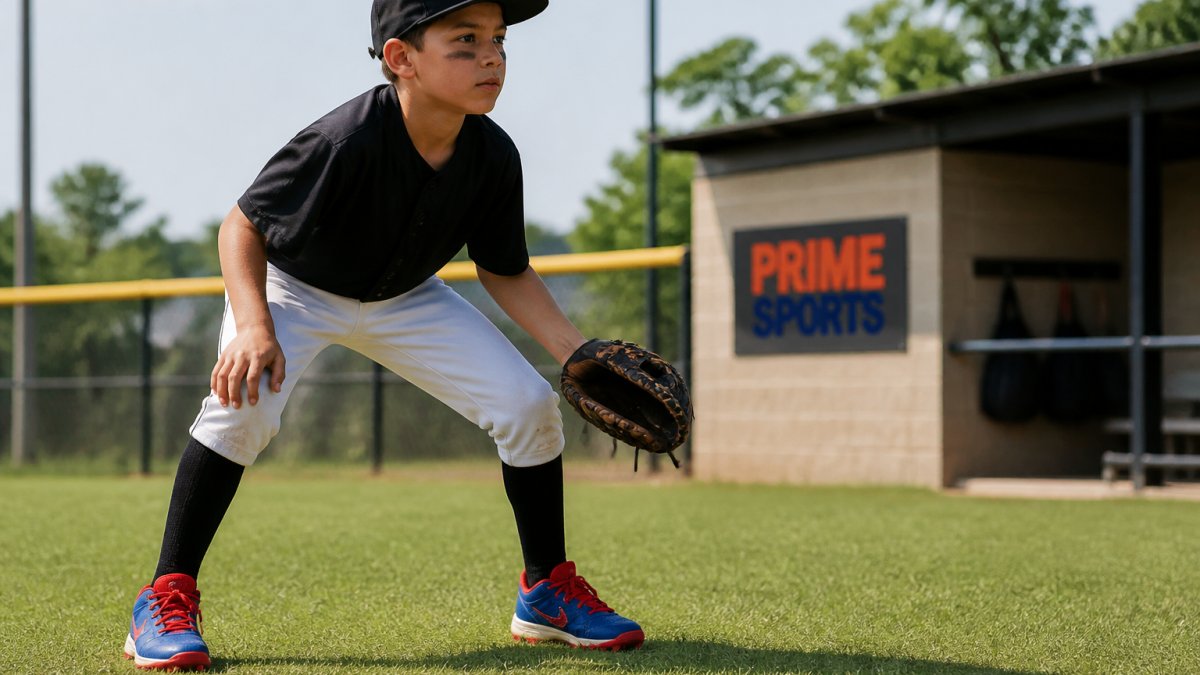
Finding the right cleats means balancing performance, fit, durability, and price.
The Phenom Elite Scooby-Doo Youth Cleats, Velocity 3.0 ($89.99) suit young speed-focused athletes.
The Phenom Elite SpongeBob Cleats, Quantum Speed 2.0 ($99.99) offer similar performance in a different style.
Both feature reinforced overlays for durability and heel padding for comfort.
Where to buy matters as much as what you buy.
At Prime Sports, you're working with a team that specializes in youth baseball equipment.
| Feature | Scooby-Doo Velocity 3.0 | SpongeBob Quantum Speed 2.0 | Best For |
|---|---|---|---|
| Weight | 7.5 oz | 8 oz | Scooby lighter for speed |
| Platform | Velocity 3.0 | Quantum Speed 2.0 | SpongeBob more cushioning |
| Traction | SprintSense™ TPU | SprintSense™ TPU | Identical performance |
| Price | $89.99 | $99.99 | |
| Age Range | 7-12 | 10-14 | SpongeBob for older players |
| Surface | Grass, turf | Grass, turf | Both perform equally |
Choosing the right baseball cleats for kids comes down to matching the shoe to your player's needs.
At Prime Sports, we've helped families navigate this decision for years.
Frequently Asked Questions
What are the best baseball cleats for kids?
The best baseball cleats for kids depend on the playing surface, foot shape, and league rules. Molded cleats work well for most young players on natural grass and turf, offering safety and stability without the sharpness of metal studs. Look for lightweight options with good ankle support and cushioning to protect growing feet. The Phenom Elite Scooby-Doo Youth Velocity 3.0 ($89.99) and SpongeBob Quantum Speed 2.0 ($99.99) are excellent choices, featuring SprintSense TPU traction plates for multidirectional grip and acceleration on natural grass and field turf.
How should baseball cleats fit a young player?
Youth baseball cleats should fit snugly around the heel and midfoot with about a half-inch of space between the longest toe and the cleat's end. The heel should not slip when walking or running. Since children's feet grow quickly, check fit every 2-3 months and account for growth without buying too large, oversized cleats reduce stability and increase injury risk. Wear the same socks your child will use during games when trying on cleats, and have them walk and jog to test comfort before buying.
Are molded or metal cleats better for kids?
Molded cleats are generally better for kids because they're safer, legal in most youth leagues, and provide reliable traction on grass and turf. Metal cleats offer more aggressive grip but pose higher injury risk in collisions and are often restricted for players under 13. Check your league's footwear rules before purchasing, many youth leagues prohibit metal cleats entirely. Molded options like the Phenom Elite youth lines deliver excellent acceleration and stability without the hazards of metal studs.
What's the difference between baseball cleats and soccer cleats?
Baseball cleats have studs or molded plates arranged for lateral quickness, explosive forward acceleration, and quick directional changes needed for base running and fielding. Soccer cleats prioritize ball control and have studs positioned differently for kicking and sustained running. Baseball cleats are typically stiffer in the midfoot for stability during pivots, while soccer cleats allow more flex. Using soccer cleats for baseball reduces traction during base stealing and on infield cuts, so stick with baseball-specific footwear.