
How to Choose the Best Custom Team Uniform Suppliers
Last Updated: October 26, 2026
Quick Summary
Custom team uniform suppliers should offer consistent quality, realistic turnaround times, design tools for visualization, and durable prints that survive a full season. The best suppliers ask clarifying questions about your timeline, budget, and customization needs upfront to prevent costly mistakes.
- Three primary logo application methods are embroidery for maximum durability, screen printing for detailed designs, and sublimation for long-term durability on polyester fabrics.
- Typical turnaround for custom uniforms ranges from 2-4 weeks depending on complexity and order size, with reliable suppliers communicating throughout production.
- Most suppliers enforce minimum order quantities with bulk discounts at certain thresholds, and transparent suppliers itemize all charges including design, setup, and rush fees upfront.
- Request detailed size charts, sample programs, and care instructions specific to each uniform style to ensure proper fit across youth and adult teams.
- Online team stores and sustainable manufacturing practices are emerging capabilities that simplify ordering and reduce environmental impact for modern teams.
Table of Contents
- What Makes a Reliable Custom Team Uniform Supplier
- Understanding Custom Uniform Design Options and Capabilities
- Custom Baseball Uniforms: Material Quality and Performance Fabrics
- Custom Uniform Turnaround Time and Delivery Speed
- Custom Uniform Pricing: Understanding Costs and Bulk Order Discounts
- Sizing, Fit Guides, and Post-Purchase Maintenance
- Sustainability, Online Team Stores, and Supply Chain Reliability
- Getting Started With Your Custom Team Uniform Order
- Frequently Asked Questions
What Makes a Reliable Custom Team Uniform Supplier
Choosing the right custom team uniform suppliers isn't just about finding the cheapest option. A reliable supplier delivers consistent quality, meets deadlines, and handles the details that separate a smooth ordering experience from a logistical nightmare.
The best custom team uniform suppliers combine several core strengths. They understand fabric performance requirements for your sport. They offer design tools that let you visualize your final product before production starts.
The most successful orders share a common trait: they came from suppliers who asked clarifying questions upfront rather than assuming what the team needed.
Understanding Custom Uniform Design Options and Capabilities
The design process is where a good supplier separates from an average one. Your supplier should offer a custom uniform design experience that lets you experiment with colors, logos, and text without committing to production.
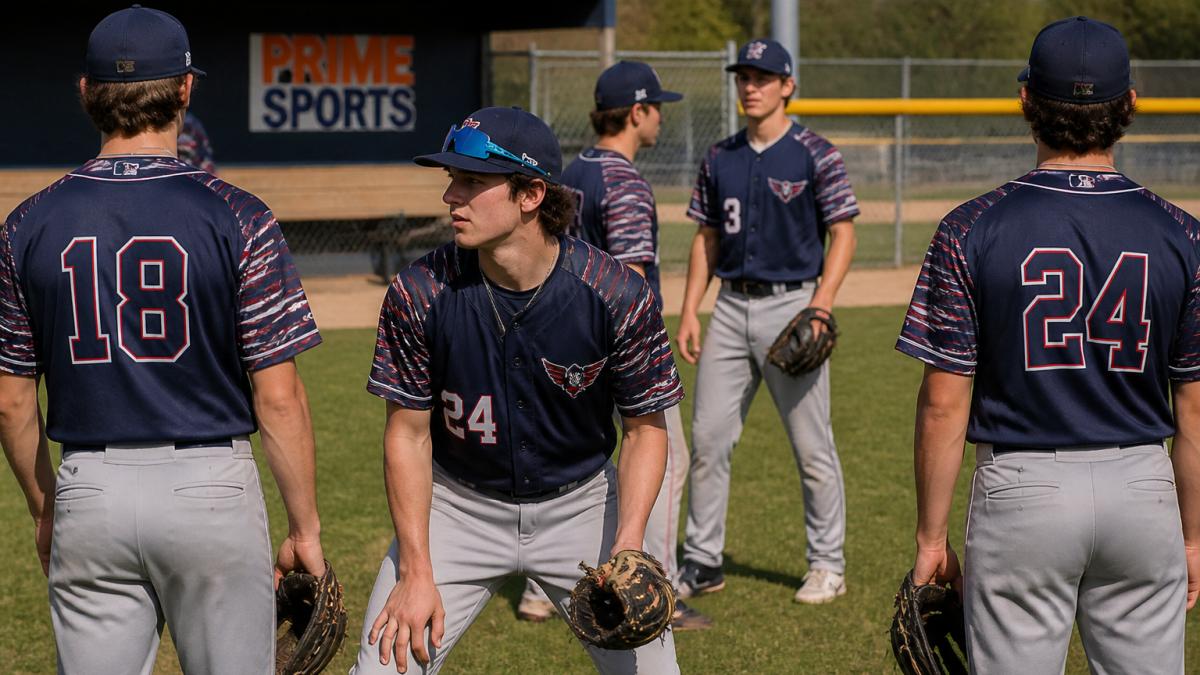
Three primary logo application methods dominate the industry: embroidery, screen printing, and sublimation. Each has distinct advantages and trade-offs that affect durability, cost, and appearance.
Logo Application Methods: Embroidery, Screen Printing, and Sublimation
Embroidery creates a raised, textured logo by stitching thread directly into the fabric. This method produces the most durable result for logos and team names. Embroidered designs withstand hundreds of washes without fading or cracking.
Screen printing applies ink directly onto the fabric through a mesh screen. This method handles detailed designs and photorealistic images better than embroidery. Screen-printed logos are flat against the fabric and dry completely within hours. The limitation is durability over time.
Sublimation uses heat to transfer dye directly into polyester fabric fibers. This creates a permanent bond where the design becomes part of the fabric itself.
Vector Artwork and Design Mockups
Before your supplier goes into production, they should provide design mockups showing exactly how your uniform will look.
Vector artwork is the industry standard for logos. Vector files use mathematical formulas to define shapes, which means they scale to any size without losing quality. Raster images (JPEGs, PNGs) are made of pixels and blur when enlarged.
Many suppliers offer free design mockups. This is a significant advantage worth seeking out. A mockup lets you see your logo placement, color accuracy, and overall aesthetic before committing.
Each logo application method offers distinct advantages and trade-offs for durability, cost, and appearance.
| Method | Best For | Key Limitation |
|---|---|---|
| Embroidery | Maximum durability and simple designs | Does not work well with complex gradients or fine details |
| Screen Printing | Detailed designs and photorealistic images | Can crack or fade after 30-50 washes with poor ink quality |
| Sublimation | Long-term durability on polyester | Only works on 100% polyester or polyester blends |
Custom Baseball Uniforms: Material Quality and Performance Fabrics
The fabric you choose determines how your uniforms perform during play. Baseball uniforms need to balance breathability, durability, and comfort during intense physical activity.
Most quality baseball uniforms use one of two fabric types: mesh blends or performance polyester. Mesh blends typically combine polyester with nylon or spandex to create lightweight, breathable fabric. Performance polyester is engineered specifically for athletic wear and often includes moisture-wicking technology built into the fiber structure.
Moisture-Wicking and Breathable Fabric Technology
Moisture-wicking fabrics pull sweat away from your skin and move it to the outer surface of the material where it evaporates faster.
Breathable fabric allows air to flow through the material, which helps regulate body temperature. Tight weaves trap heat. Open weaves and mesh constructions allow airflow.
When evaluating fabrics, ask your supplier about the specific construction. A 100% polyester circular knit with 2-way stretch offers excellent performance for baseball. The circular knit construction creates a smooth, breathable fabric.
Explore the Rawlings Launch Adult Knicker Baseball Pant(page:1), which features performance fabric technology designed for competitive play.
Durability and Color Fastness Standards
Color fastness refers to how well a fabric retains its color through washing and exposure to sunlight. High color fastness means your team colors stay vibrant throughout the season.
Premium uniform suppliers use dyes and fabrics that meet AATCC (American Association of Textile Chemists and Colorists) color fastness standards. These standards test how fabric resists fading under specific conditions. A supplier that mentions AATCC compliance is prioritizing durability.
Durability also depends on seam quality and fabric weight. Heavier fabrics (measured in ounces per square yard) resist wear better than lightweight fabrics. Double-stitched seams hold up longer than single stitches.
Custom Uniform Turnaround Time and Delivery Speed
Turnaround time is where many teams get burned.
Reliable suppliers build realistic timelines into their quotes. They account for design approval, production setup, printing or embroidery time, quality checks, and shipping.
The key question to ask: what's included in the turnaround time? Does it start from when you place the order, or from when your design is approved?
We communicate throughout production so you know exactly where your order stands. If delays occur, we notify you immediately rather than letting you discover the problem at delivery.
Custom Uniform Pricing: Understanding Costs and Bulk Order Discounts
Uniform pricing depends on several variables: fabric quality, customization complexity, printing method, order quantity, and rush fees. There's no single "standard price" because each order is unique.
Minimum Order Quantities and Budget Considerations
Most suppliers enforce a minimum order quantity (MOQ). This might be 24 uniforms, 50 uniforms, or some other threshold. The MOQ exists because setup costs are fixed regardless of order size.
Bulk order discounts kick in at certain quantity thresholds. Ordering 100 uniforms typically costs less per unit than ordering 50. The exact pricing structure varies by supplier, so it's worth asking for tiered quotes.
Budget planning requires understanding what's included in the price. Does the quoted price include design work? Does it cover shipping? Are there hidden fees for rush orders, design revisions, or sample approvals?
Customization Process and Hidden Costs
The customization process can introduce unexpected costs if you're not careful. Common hidden fees include:
- Design revision charges if you request changes after initial approval
- Setup fees for embroidery or screen printing machines
- Rush fees if you need faster turnaround
- Shipping costs if not included in the quoted price
- Restocking fees if you need to return or exchange items
Transparent suppliers list these fees upfront. They provide written quotes that itemize every charge. They explain what's included and what costs extra. If a supplier gives you a vague quote without detail, ask for clarification before committing.
Sizing, Fit Guides, and Post-Purchase Maintenance
Sizing consistency is critical when ordering for a team. Nothing's worse than receiving uniforms where half the order doesn't fit properly.
Consistent Sizing Across Youth and Adult Teams
Different manufacturers use different sizing standards. One brand's medium might fit like another brand's small. This becomes a real problem when you're ordering for mixed-age teams with both youth and adult players.
The best suppliers provide detailed size charts specific to each uniform style. They account for the difference between youth and adult sizing.
Review the Rawlings Launch Semi-Relaxed Piped Youth Baseball Pant(page:2) for an example of youth-specific sizing with detailed fabric specifications.
Some teams order from the same supplier year after year specifically because they know the sizing is consistent. If you're switching suppliers, request samples first.
Care Instructions and Print Durability Through the Season
How your team cares for uniforms directly impacts how long the prints last. Suppliers should provide clear care instructions that explain washing temperature, drying methods, and any special handling requirements.
Screen-printed uniforms need gentler care than embroidered uniforms. Washing in cold water and air-drying extends print life significantly. Hot water and machine drying accelerate fading and cracking.
Quality suppliers stand behind their work. If a print fails within a reasonable timeframe despite proper care, a good supplier will replace it. This guarantee gives you peace of mind that your investment is protected.
Sustainability, Online Team Stores, and Supply Chain Reliability
Modern uniform suppliers increasingly offer features that go beyond basic customization.
Online team stores let you create a branded portal where team members can order their own uniforms, spirit wear, and equipment.
Sustainability is becoming a differentiator for teams that care about environmental impact. Some suppliers use recycled polyester, water-efficient dyeing processes, or carbon-neutral shipping.
Supply chain reliability matters most during high-demand seasons. If a supplier's manufacturing partner has capacity issues, your order could be delayed.
Explore custom uniform options including Gateway Grays Custom Baseball Socks(page:3) to see the range of team apparel customization available.
Getting Started With Your Custom Team Uniform Order
The first step is gathering your team's requirements. Document how many uniforms you need, your timeline, your budget range, and your design preferences. Know whether you need youth sizes, adult sizes, or both.
Then reach out to potential suppliers and request detailed quotes. Ask about design mockups, size sampling, turnaround times, and what's included in their pricing. Request references from other teams they've worked with.
Prime Sports combines the selection of a major sporting goods retailer with personalized service. We handle custom uniforms, team stores, and apparel decoration through our online platform and retail locations.
Frequently Asked Questions
What should I look for in a custom team uniform supplier?
Prioritize suppliers that offer professional-grade materials, reliable turnaround times, and clear communication about customization options. Verify they provide accurate sizing guides, transparent pricing with bulk discounts, and examples of past team orders. Check whether they offer multiple application methods (embroidery, screen printing, sublimation) and whether their print quality holds up through washing and game-day use. Confirm they can handle your minimum order quantity and timeline.
What is the difference between sublimated and screen-printed uniforms?
Sublimation uses heat to transfer dye directly into the fabric, creating vibrant, all-over designs that won't crack or fade. Screen printing applies ink to the surface, ideal for logos and solid colors, and is typically more cost-effective for simpler designs. Sublimation works best on polyester performance fabrics and handles moisture-wicking better. Screen printing offers durability for high-wear areas but may fade faster after many washes. Your choice depends on design complexity, fabric type, budget, and how much wear the uniform will see.
How long does it take to get custom team uniforms?
Custom uniform turnaround time typically ranges from 2 to 4 weeks, depending on order size, complexity, and the supplier's production schedule. Rush orders may be available but usually cost more. Factors affecting speed include whether artwork needs revisions, minimum order quantities, and current production volume. Always confirm turnaround time before placing an order, especially if you have a specific season start date. Some suppliers offer expedited shipping for an additional fee.
How much do custom team uniforms cost?
Custom uniform pricing depends on order quantity, fabric choice, application method, and design complexity. Bulk orders typically cost less per unit than small orders. Sublimation and embroidery generally cost more than basic screen printing. Pricing also varies by supplier and material quality. Rather than guessing, request a quote based on your specific needs: team size, desired materials, design details, and timeline. Most suppliers offer bulk discounts that improve significantly at higher quantities.
Choosing the right supplier shapes your entire team experience. The right partner delivers quality uniforms on schedule, communicates clearly when issues arise, and stands behind their work. Invest time upfront in evaluating suppliers based on the criteria that matter most to your team. The difference between a supplier that just fills orders and one that partners with you to get uniforms right is worth the extra effort.
