

Durable Youth Baseball Apparel for Practice: 2026 Guide
Table of Contents
- What to Look for in Durable Youth Baseball Apparel for Practice
- Youth Baseball Pants Built for Slides and Double Knees
- Youth Baseball Shirts That Breathe Through Summer Practice
- Moisture-Wicking Baseball Apparel for Kids: Why It Matters
- Shorts, Sliding Protection, and Socks: The Practice Layers Families Forget
- How to Wash Baseball Uniforms and Practice Gear So It Lasts
- Budget and Cost Per Wear: Building a Practice Wardrobe That Pays Off
- Conclusion
- Frequently Asked Questions
Last Updated: October 17, 2026
What to Look for in Durable Youth Baseball Apparel for Practice
Durable youth baseball apparel for practice is clothing built to survive repeated wash cycles, dirt, sliding, and growth spurts without losing shape or protection. At Prime Sports, we offer durable youth baseball apparel for practice. The core idea is simple: buy fewer pieces, choose better construction, and care for them properly.
Below, we'll show you exactly how to judge fabric, seams, and fit before you spend a dollar. We'll also cover the layers most families forget and how to build a practice wardrobe that pays off over time. But first, here's what most buying guides get wrong: they focus on looks and skip construction entirely.
Durable youth baseball apparel is defined by three things: fabric weight and blend, reinforced seams, and a fit that allows movement without excess fabric to snag. According to Consumer Product Safety Commission guidance on children's apparel safety, fit and construction matter for both safety and wear.
Fabric and Construction That Survive Repeated Wear
The biggest mistake with practice clothing is buying on price alone. Thin cotton tees and single-stitched seams fail fast under weekly practice loads. Look for double-knit polyester, reinforced double knees, and flatlock or twill-taped seams that resist pulling.
Check these construction details before buying:
- Fabric blend: Polyester and spandex blends hold shape and dry faster than cotton.
- Seam type: Double-stitched or taped seams outlast single stitching.
- Knee reinforcement: Double knees add durability where players slide and kneel.
- Waistband: A snap or gel-grip waistband stays put through movement.
- Hem style: Elastic and jogger cuffs resist fraying better than loose open hems.
Youth Baseball Pants Built for Slides and Double Knees
Youth baseball pants take the most abuse of any practice item. Sliding, diving, and kneeling wear through fabric at the knees and seat first. The fix is double-knee construction and stretch polyester that recovers its shape.
Our pick for most families is the Rawlings Launch Jogger Style Youth Baseball Pants at $44.99. It uses enhanced mechanical stretch polyester, a gel-grip waistband, and double knees for added durability. The piped version at $49.99 adds uniform-ready trim.
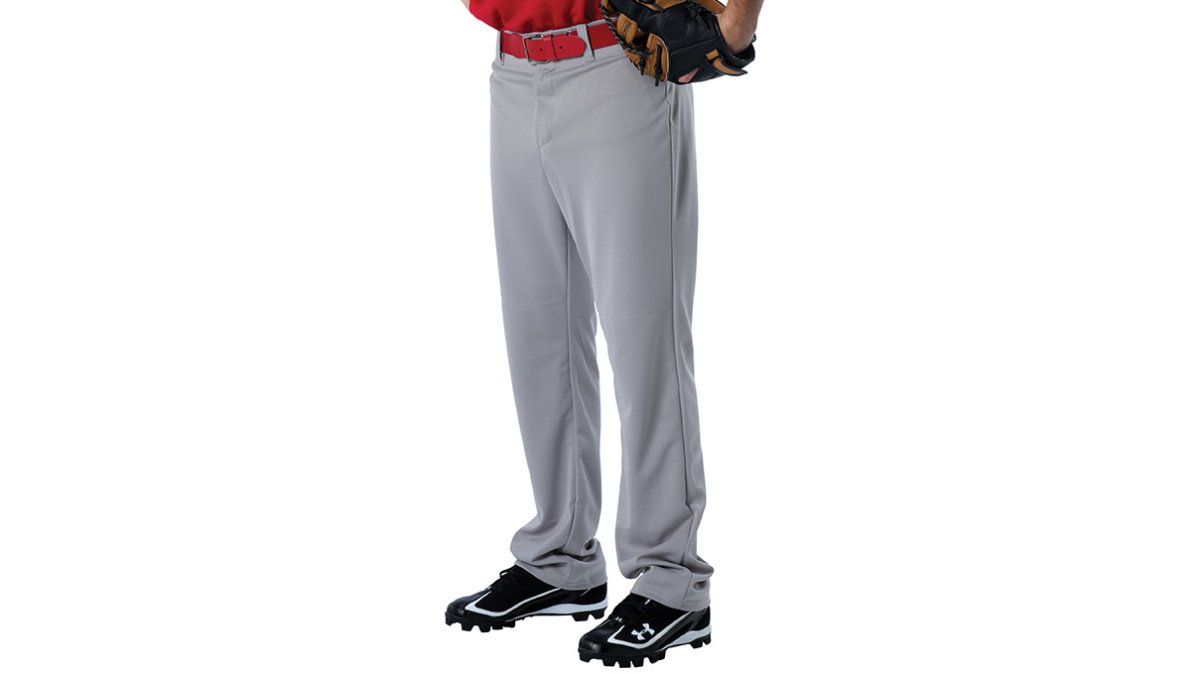
For budget-minded families, the Alleson Youth Baseball Pant starts at $21.99 with an elastic bottom that resists fraying. The Alleson Open Bottom Youth Baseball Pant runs $22.95, and the Marucci Youth Double-Knit Knickers at $34.99 suit players who prefer a tapered knicker cut.


| Pant | Price | Key Durability Feature | Best For |
|---|---|---|---|
| Alleson Elastic Bottom | $21.99 | Elastic hem, budget build | First-season players |
| Alleson Open Bottom | $22.95 | Open hem, simple construction | Casual practice |
| Marucci Double-Knit Knickers | $34.99 | Double-knit taper | Players wanting a fitted cut |
| Rawlings Launch Jogger | $44.99 | Double knees, stretch polyester | Frequent practice and play |
| Rawlings Launch Jogger Piped | $49.99 | Double knees, uniform piping | Game-day matching |
Youth Baseball Shirts That Breathe Through Summer Practice
Youth baseball shirts should move sweat away from skin and dry fast between drills. A cotton tee soaks through and stays heavy. A performance tee with moisture management keeps players cooler and reduces chafing.
The Marucci Youth Performance Tee at $24.99 is built for exactly this. It uses a 95% polyester, 5% spandex blend with moisture-management fabric, a soft lightweight feel, and a twill-taped neck for comfort. It works as a practice shirt or an undershirt under a jersey, and the blank front is ready for team screening.
When shopping, prioritize breathable fabric and easy layering. A short-sleeve shirt handles hot practices; a long-sleeve shirt or hoodie works as a warm-up layer on cool mornings.
Moisture-Wicking Baseball Apparel for Kids: Why It Matters
Moisture-wicking baseball apparel for kids matters because young players sweat heavily and cool down fast between drills. Fabric that traps moisture keeps skin damp, which leads to chafing and chill. Wicking fabric pulls sweat to the surface where it evaporates.
Look for labels that name moisture management directly, not vague "breathable" claims. A performance tee paired with moisture-control socks covers most of the body's sweat zones. The TCK PolyPro Tube Socks at $13.99 use DRY-IQ moisture control technology to wick moisture and help prevent blisters, with a double welt top that stays up.
The American Academy of Pediatrics guidance on youth sports hydration and heat notes that proper clothing and hydration reduce heat-related risk during practice. That makes fabric choice a safety decision, not just a comfort one.
Shorts, Sliding Protection, and Socks: The Practice Layers Families Forget
Shorts, sliding protection, and socks are the layers families skip, then replace mid-season. These pieces protect against injury and extend the life of pants and cleats.
The Franklin MLB Youth Sliding Shorts at $14.99 are the base layer worth buying first. They include built-in sliding pads on the legs and rear, a cup pocket that fits most youth athletic cups, and flexible polyester compression that resists impacts. The EvoShield Youth Pro Team Training Short 2.0 at $29.99 is a lightweight, breathable 100% polyester short for practice and workouts.
Alleson Youth Baseball Pant Elastic Bottom →
Socks finish the kit. Over-the-calf tube socks protect shins and keep cleats comfortable. Buy two or three pairs per player so a wet pair never forces a skipped practice.
How to Wash Baseball Uniforms and Practice Gear So It Lasts
How you wash baseball uniforms decides how long they last. Most practice gear fails from heat and harsh detergent, not from play. Cold water, mild detergent, and air drying preserve fabric and elastic.
The wash routine
- Turn garments inside out and close zippers and snaps.
- Wash in cold water on a gentle cycle with mild detergent.
- Skip fabric softener, which coats wicking fabric and reduces performance.
- Air dry or tumble on low; high heat breaks down elastic and spandex.
- Wash socks separately from velcro to prevent snags.
Stain removal: dirt, grass, and infield clay
Practice gear collects three stains that ordinary washing leaves behind: ground-in dirt, grass, and infield clay or red dirt. Treat stains before the first wash, heat from a dryer can set a stain permanently.
- Ground-in dirt and clay: Let the stain dry, then brush off loose soil before washing. Pre-treat with a gentle liquid detergent or a dedicated stain remover and let it sit for several minutes before washing in cold water.
- Grass: Pre-treat with a detergent that contains enzymes, which break down the proteins and pigments in grass stains. Work it into the fabric and let it dwell before washing.
- Sweat and odor: Wash promptly after practice rather than letting gear sit in a bag. Odor that survives a normal wash often means detergent residue or fabric softener buildup; a second rinse helps.
Avoid chlorine bleach on performance fabrics and on any colored piece unless the care label explicitly allows it, bleach weakens spandex and can strip dye.
Drying trade-offs
Air drying is the safest choice for elastic, spandex, and wicking finishes. If you tumble dry, use the lowest heat setting and remove pieces while slightly damp. High heat is the most common cause of cracked waistband elastic, shrunken pants, and reduced moisture-wicking performance. Hang or lay flat to dry in a ventilated space; a second set of practice gear in rotation means you are never forced to tumble dry on high heat just to have something clean for the next practice.
Realistic signs it is time to replace a piece
Practice apparel does not fail all at once. Watch for these signals:
- Thinning or see-through fabric at the knees, seat, or elbows.
- Seam separation at the crotch, knee, or armpit that reappears after repair.
- Elastic that no longer recovers, a waistband that stays stretched or rolls.
- Persistent odor that survives washing, which usually means fabric has trapped bacteria or detergent residue.
- Fading or bleeding that continues after the first few washes.
- Fit that has become too tight through the shoulders or thighs after a growth spurt.
A piece that shows one of these signs is a candidate for replacement; two or more usually means it has reached the end of its practice life. Keeping a simple rotation, two shirts, two pants, and several pairs of socks, spreads wash wear across more garments and stretches the lifespan of each one.
The FTC guidance on caring for textile products reinforces that following care labels protects both the garment and your consumer rights if a product fails. Print the care label instructions and tape them inside the laundry cabinet.
Budget and Cost Per Wear: Building a Practice Wardrobe That Pays Off
Cost per wear is the honest way to judge practice apparel. A $22 pant worn twice costs more per use than a $45 pant worn forty times. Durability lowers the real cost of a season.
Here is a starting wardrobe for one youth player, with real prices:
- Two practice shirts: Marucci Performance Tee at $24.99 each
- One pair of practice pants: Rawlings Launch Jogger at $44.99
- One pair of sliding shorts: Franklin at $14.99
- Two pairs of socks: TCK at $13.99 each
That total runs about $123 for a base kit that covers most practices. Adding a second pant and a warm-up layer extends the rotation and reduces wash frequency, which stretches lifespan further. At Prime Sports, we can set up custom team apparel and online team stores so coaches order once and parents get consistent sizing.
| Item | Price | Replace Frequency | Cost Per Season |
|---|---|---|---|
| Performance tee | $24.99 | 1-2 seasons | Low |
| Practice pants | $44.99 | 1-2 seasons | Low |
| Sliding shorts | $14.99 | 2+ seasons | Very low |
| Tube socks (pair) | $13.99 | 1 season | Low |
Conclusion
Building a practice wardrobe that survives a full season takes planning. Prime Sports offers durable youth baseball apparel, custom uniform building, and team ordering. Shop our baseball apparel and team gear to outfit your player or your whole team for the season ahead.
Frequently Asked Questions
What should kids wear to baseball practice?
A complete practice outfit starts with a moisture-wicking youth baseball shirt, athletic shorts or baseball pants, sliding shorts with a cup pocket, and over-the-calf socks. Add a hoodie or long-sleeve layer for cool mornings and a cap for sun protection. Look for lightweight, breathable fabric that moves with the player, and choose pants with reinforced knees if your child slides often. Two or three outfits let you rotate between washes without running out midweek.
Are baseball pants necessary for practice?
Not always, but they help in specific situations. Training shorts work well for warm-up drills, throwing, and conditioning. Baseball pants matter once players start sliding, taking grounders on infield dirt, or practicing in cooler weather. Pants with double knees and stretch polyester handle repeated slides better than shorts and protect legs from scrapes. Many families keep one pair of durable youth baseball pants for sliding practice and shorts for everything else.
How should youth baseball practice pants fit?
Practice pants should fit snug at the waist without digging in, with enough room in the seat and thighs to squat and run. The hem should reach the shoe without dragging on the ground. Check the size chart for waist measurements rather than age, since youth sizing varies between brands. Elastic-bottom pants stay in place during slides, while open-bottom styles fit over cleats more easily. If your player is between sizes, size up for growing room.
How do you wash baseball practice clothes to make them last?
Turn garments inside out, wash in cold water on a gentle cycle, and skip fabric softener because it clogs moisture-wicking fibers. Use a mild detergent and avoid bleach on colored uniforms. Tumble dry on low or hang dry to protect elastic, prints, and stretch fabrics. Following these steps keeps moisture-wicking baseball apparel for kids performing and reduces fading on screen-printed or sublimated designs.