
7 Custom Corporate Apparel Choices for Local Businesses
Last Updated: October 26, 2026
Quick Summary
Custom corporate apparel builds brand recognition and team identity while signaling professionalism to customers. For local businesses, a two-tier lineup of durable daily-wear tees for back-of-house roles and nicer polos or button-downs for client-facing staff offers the most practical approach.
- The Rawlings Adult Crew Neck Tech Tee costs $24.99 and is made of 100% polyester interlock for moisture management.
- Screen-printed logos fade after 30-40 washes, while embroidery outlasts screen printing for daily-wear apparel.
- Setup fees on small orders can equal the garment cost, so confirm whether providers store screens and files for reorders.
- A sample annual budget for a 20-person team with core tees, polos, seasonal wear, and buffer stock totals approximately $3,372.
Table of Contents
- Why Custom Corporate Apparel Matters for Your Business
- Selecting the Right Garment Types and Custom Company Logo Shirts
- Embroidered Corporate Apparel vs. Screen Printing Methods
- Custom Uniforms for Small Businesses: Sizing and Fit
- Business Apparel Printing: Setup Costs, Volume Pricing, and Turnaround
- Total Cost of Ownership: Budgeting for Branded Clothing
- Building a Reorder and Replacement Plan
- Frequently Asked Questions
Why Custom Corporate Apparel Matters for Your Business
Custom corporate apparel builds brand recognition and team identity. Employees in branded clothing can help present a consistent brand image.
Branded apparel also signals professionalism. A contractor in a logoed polo looks more established than one in a generic t-shirt, and a retail team in matching performance tees projects consistency.
The challenge isn't whether to invest, but how to avoid overspending or ending up with inventory that doesn't fit, fades, or sits unused.
Selecting the Right Garment Types and Custom Company Logo Shirts
The garment type can influence how apparel is used. Consider the role and how often the employee faces customers.
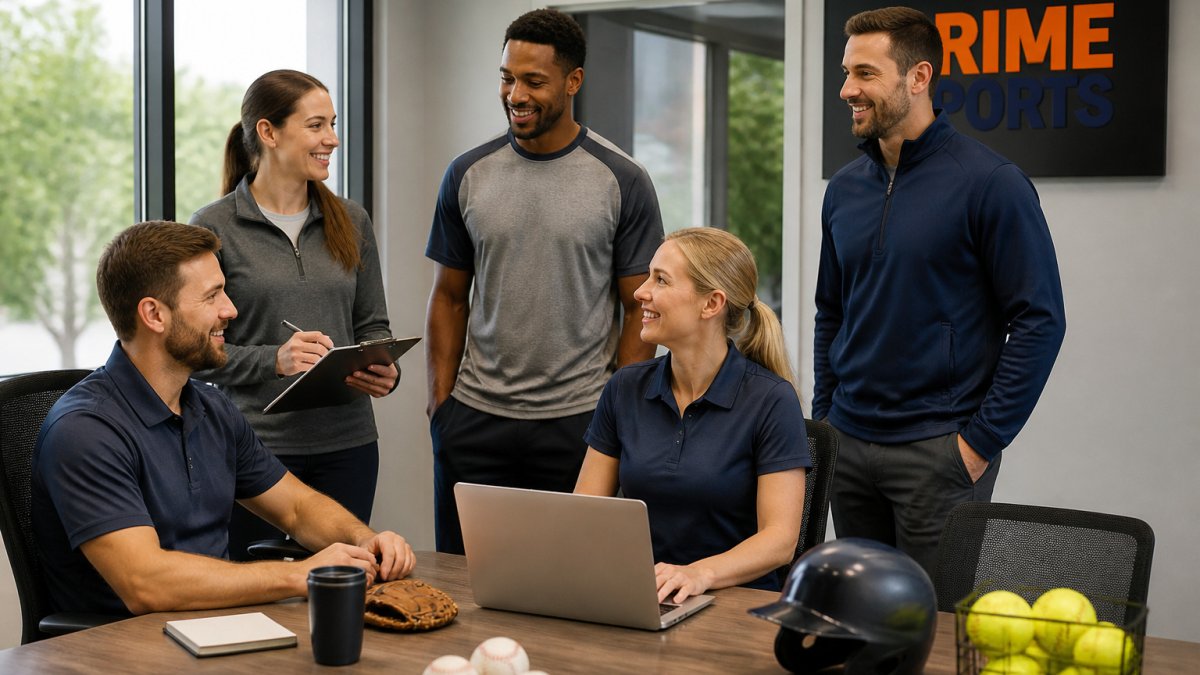
Match the Garment to the Job, Not the Industry
| Role type | Best default garment | Why it works | Watch out for |
|---|---|---|---|
| Back-of-house, warehouse, shop floor | Performance tee, 100% polyester interlock | Moisture-wicking, holds up to frequent washing, low replacement cost | Cheap 50/50 blends pill and shrink after a few dozen washes |
| Front counter, retail floor, service desk | Polo, 100% cotton or cotton/poly blend | Collar reads as "on duty" without formality; easy to embroider | Thin collars curl after repeated washing; check collar construction |
| Field technicians, installers, delivery | Performance tee plus a branded jacket or vest | Layers handle temperature swings; outer layer carries the logo | Jackets cost 2-3x a tee, so budget them as a separate line item |
| Sales, account management, consulting | Polo or button-down | Signals professionalism in client meetings | Fit matters more than fabric here; verify sizing before bulk order |
| Events, promotions, giveaways | Basic cotton tee or performance tee | Low cost per unit at volume; broad size range | Giveaway shirts get washed hard; expect shorter life than staff wear |
Consider whether different roles call for different garment types.
T-shirts and Performance Tees for Daily Wear
Performance tees are one option to consider for daily wear.
The Rawlings Adult Crew Neck Tech Tee at $24.99 is made of 100% polyester interlock material and is described as a high-performance moisture-management shirt.
Polo Shirts and Button-Down Options for Client-Facing Roles
Fit matters more with polos than t-shirts; an ill-fitting polo undermines the professional look you're projecting. View polo shirt options suitable for client-facing roles. Verify sizing consistency across brands and styles with your provider.
Jackets, Vests, and Seasonal Apparel
Budget seasonal items separately from core daily wear. Explore jacket options for seasonal apparel needs. A jacket costs more upfront but gets worn consistently during its season, keeping per-wear cost reasonable.
Fabric Weight and Construction Checks Before You Order
- What is the fabric weight? Tees are commonly sold in the 4.2-6.1 oz/yd² range. Lighter tees (under about 4.5 oz) feel cooler but show wear faster; heavier tees (5.5 oz and up) hold shape and print better but can feel hot in summer.
- Is the collar reinforced? A taped neck and shoulders and a two-needle hem are the difference between a shirt that survives a year of washing and one that curls at the collar by month three.
- Is the fabric 100% cotton, a blend, or 100% polyester? This determines which decoration methods will work, see the decoration section below, and how the shirt behaves after repeated washing.
Build a Two-Tier Lineup Instead of a Single Uniform
For most local businesses, the practical answer is a two-tier lineup: a durable, low-cost daily-wear tee for hard-working roles and a nicer polo or button-down for customer-facing roles. Add a seasonal outer layer if your team works outdoors. This keeps most of your budget on the pieces worn most while putting your best-looking garment in front of customers.
Embroidered Corporate Apparel vs. Screen Printing Methods
Prime Sports offers screen printing and embroidery as apparel decoration services.
When to Choose Embroidery for Durability
Per-unit embroidery cost runs higher than screen printing, especially on small orders, but the durability justifies it for pieces worn regularly.
Screen Printing for Full-Color Designs and Bulk Orders
Screen-printed logos fade faster than embroidered ones, especially on performance tees, color degradation shows after 30-40 washes. For daily-wear apparel, embroidery outlasts screen printing.
Sublimation for High-Detail Custom Designs
Per-unit cost falls between embroidery and screen printing, with moderate setup costs. For teams wanting premium, durable, detailed custom designs, sublimation delivers.
Custom Uniforms for Small Businesses: Sizing and Fit
Document sizing preferences when you order. Keep records of what fit worked for each person. Reorders become faster and more accurate when you know Sarah wore a large in the Rawlings tee but a medium in the Marucci.
Business Apparel Printing: Setup Costs, Volume Pricing, and Turnaround
The biggest mistake is underestimating setup costs. You can purchase logo design services to understand design costs before ordering. A small order for 10 shirts might have setup fees equal to the garment cost. Minimum order quantities exist for a reason. Work with your provider to understand the cost structure before committing.
Total Cost of Ownership: Budgeting for Branded Clothing
Build the budget in four layers, in this order.
Layer 1: Landed Cost Per Unit
Start with what one finished, decorated, delivered piece actually costs:
- Garment price, the blank cost, e.g., $24.99 for the Rawlings Adult Crew Neck Tech Tee.
- Decoration charge, the per-piece print or embroidery cost, which varies by method and color count.
- Setup or screen fee, a one-time charge per design, per color, per order. This is the line most small orders miss.
- Shipping, per-order, not per-piece, so it shrinks as order size grows.
Layer 2: Setup Fees and Reorder Economics
- Ask whether screens or embroidery files are stored for reorders. Many providers keep screens and digitized logo files on file for a set period, which lets a reorder skip the setup fee. Confirm this in writing before the first order.
- Batch reorders to clear the minimum. If your provider has a 12- or 24-piece minimum per design, a 6-shirt reorder for new hires may trigger a small-order surcharge or a fresh setup fee. Keeping 5-10 blank or undecorated extras in common sizes in your buffer stock is often cheaper than a small reorder.
Layer 3: Replacement Rate and Per-Wear Cost
Per-wear cost is the number that actually tells you whether a garment is a good deal. The formula:
Per-wear cost = (landed cost per unit) ÷ (estimated wears before replacement)
Layer 4: The Full Annual Budget
Put the layers together into an annual number:
| Line item | How to estimate | Example (20-person team) |
|---|---|---|
| Core daily-wear tees | 2 per person × landed cost | 40 × $33 = $1,320 |
| Client-facing polos | 1-2 per person × landed cost | 25 × $45 = $1,125 |
| Seasonal outerwear | 1 per outdoor role, amortized over 2-3 years | 8 × $85 ÷ 3 = ~$227/yr |
| Buffer stock | 5-10 pieces in common sizes | ~$300 |
| Replacement reserve | 15-25% of core apparel spend per year | ~$400 |
| Annual total | ~$3,372 |
Compare Two Programs Side by Side Before You Commit
When you have two quotes, convert both to the same unit, annual cost for a defined team size and wear schedule, before deciding. A quote that looks 20% cheaper per shirt can lose on setup fees, reorder minimums, or replacement rate. The provider that helps you run this comparison is usually the one worth building a long-term program with.
Building a Reorder and Replacement Plan
Prime Sports offers apparel from brands including Rawlings and Marucci, along with custom uniforms, apparel decoration, and corporate wear. Shop custom apparel options.
Frequently Asked Questions
What is the difference between screen printing and embroidery for custom corporate apparel?
Prime Sports offers screen printing and embroidery as apparel decoration services. Contact the store to discuss available options.
How many custom shirts should a small business order to make the per-unit cost reasonable?
Most vendors offer volume discounts at 50-unit, 100-unit, and 250-unit thresholds. A small business with 10-20 employees might start with 25-50 shirts to cover daily wear plus extras for new hires and replacements. If you're ordering custom company logo shirts with setup costs included, ordering at least 50 units spreads that cost across more garments, lowering your per-unit price significantly. For ongoing needs, plan reorders quarterly or semi-annually to maintain consistent inventory without overbuying.
How do I ensure sizing is consistent when ordering custom uniforms for small businesses from different manufacturers?
Request detailed size charts from your vendor before ordering and compare them across brands, many manufacturers size differently, so what's a Medium in one brand may fit like a Small in another. Order a sample or test pack in multiple sizes if possible, especially for your first order. Work with a vendor that offers free exchanges or returns on sizing issues within a reasonable window. Communicate your team's typical sizes upfront and ask your vendor to flag any unusual fit issues based on their experience with that garment type.
What should I look for when choosing a business apparel printing vendor?
Evaluate vendors on turnaround time, setup costs, per-unit pricing at your expected order volume, quality guarantees on print durability, and responsiveness to questions. Ask about their experience with your specific garment types and decoration method. Request samples of their work or references from similar businesses. Confirm they can handle your timeline and order size, and clarify their policy if something goes wrong, fast, local communication matters when you have a deadline. A vendor that combines competitive pricing with reliable turnaround and professional support will save you headaches and rush fees.
