


Best Protective Gear for Youth Catchers
Table of Contents
- Quick Comparison: Youth Catcher Gear Kits by Age and Budget
- How to Size Youth Catcher's Gear for the Right Fit
- Best Youth Catcher's Mask: Protection and Visibility
- Youth Catcher's Chest Protector: Safety Standards and Certification
- Youth Catcher's Leg Guards: Durability and Mobility
- Complete Kits vs. Individual Pieces: What Makes Sense
- Baseball vs. Softball Catcher Gear: Key Differences
- Care, Inspection, and When to Replace Youth Catcher Gear
- Frequently Asked Questions
Last Updated: October 6, 2026
Quick Comparison: Youth Catcher Gear Kits by Age and Budget
Selecting the right protective gear for youth catchers is one of the most important decisions a parent, coach, or young athlete can make. Well-fitted equipment keeps a catcher focused behind the plate; poorly sized gear causes chafing, slipping masks, and restricted movement.
This guide from Prime Sports covers choosing the best protective gear for youth catchers, based on input from young players, parents, and coaches. Options range from budget-friendly starter kits to premium equipment for competitive travel ball players.
Here's what makes sense for different age groups and investment levels:
| Age Group | Budget Option | Mid-Range Pick | Premium Choice |
|---|---|---|---|
| Ages 7-9 | All-Star Future Star Series ($179.95) | Wilson EZ Gear 2.0 ($179.95) | All-Star Top Star Series ($279.95) |
| Ages 9-12 | Rawlings Players Series ($159.99) | Champro Optimus MVP Plus ($189.95) | All-Star Top Star Series ($279.95) |
| Ages 12-16 | Wilson C200 ($279.95) | Rawlings Storm Youth Fastpitch ($219.99) | All-Star System 7 Axis ($479.95) |
The most common mistake parents make is buying gear one size too large "to grow into it." Oversized gear shifts during play, reduces protection, and slows young catchers behind the plate. Buy for the current season and plan to upgrade every 12-18 months as your player grows.

How to Size Youth Catcher's Gear for the Right Fit
Proper sizing for youth catcher's gear requires measuring three components: helmet, chest protector, and leg guards. Each has its own sizing standard, and they don't always align, a player who wears a size 7 helmet might need a 12-inch chest protector and 13-inch leg guards.
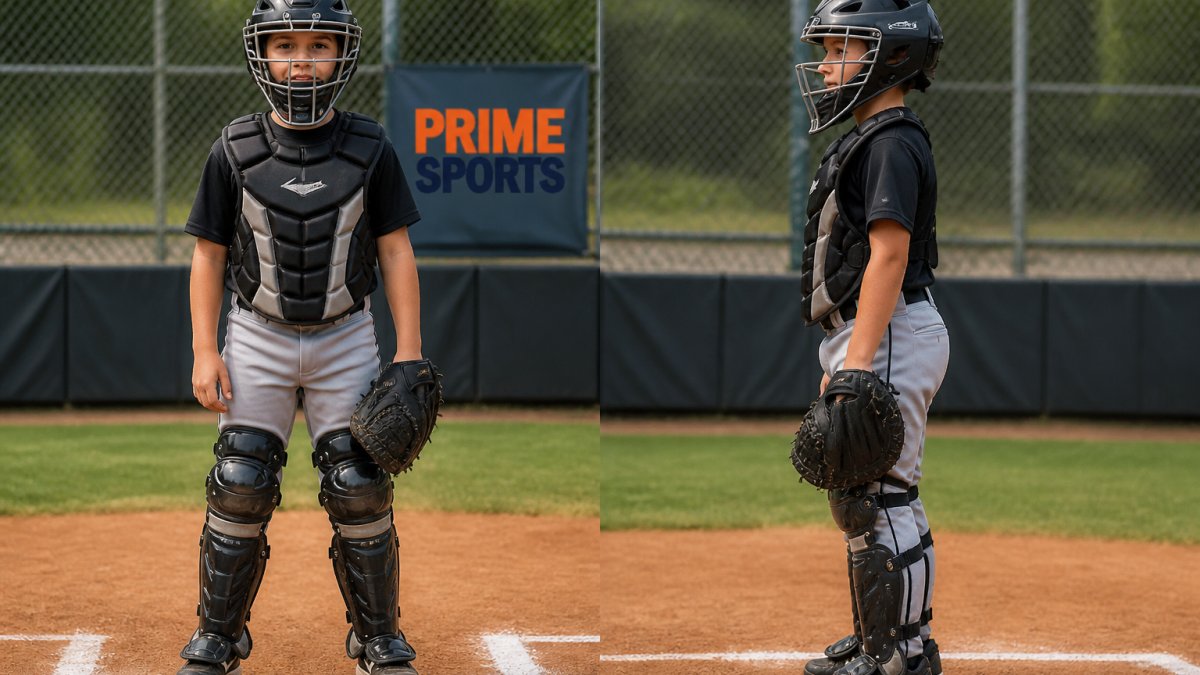
Helmet and Mask Sizing
Your youth catcher's helmet must fit snugly without being tight. The mask should rest evenly on the face, and the chin pad should contact the chin without pinching. Measure head circumference just above the eyebrows and ears with a soft tape.
Head circumference determines helmet size. Most youth helmets fit head sizes 6-7 inches (ages 7-12). Older players or those with larger head circumferences may need 7-7 7/8 inches. The helmet should not slide when you gently push it side to side. If it shifts more than a quarter-inch, it's too large.
The hockey-style catcher's mask is now standard in youth baseball, offering better visibility and superior protection around the entire head. When worn, the mask bars should align with your player's eyes, not too high (blocking vision) or too low (reducing forehead protection).
Chest Protector Measurements
Chest protector sizing is measured in inches, typically ranging from 11 inches for younger players to 14 inches for larger youth catchers. Measure from the top of your player's shoulders down to roughly 2 inches below the navel. This measurement determines the correct chest protector length.
The chest protector should cover the torso without restricting hip movement when crouching. Shoulder caps should sit flush, not hang off the sides or bunch in the armpits. Look for adjustable straps to customize fit as your player grows.
Many modern youth chest protectors include removable groin protection. Make sure this component is present and secure. The protector should feel snug but allow full arm movement for throwing and blocking.
Leg Guard Length and Fit
Leg guards come in standard lengths: 13 inches for younger youth players (ages 7-12) and 15 inches for older youth catchers (ages 12-16). Measure from the top of your player's thigh (where the guard should sit) down to the top of the shoe. This measurement guides your selection.
Leg guards should cover the knee completely and extend down the shin without gaps. When your player crouches, the guards should stay in place without sliding. The foot pocket should be snug enough to prevent slipping but loose enough for free movement.
Adjustable straps are essential for growing players. Look for multiple attachment points to customize fit as your player develops. Velcro closures are convenient between innings; metal buckles offer more secure positioning.
Best Youth Catcher's Mask: Protection and Visibility
The catcher's mask is the most visible piece of gear and the most critical for safety, protecting against foul balls, wild pitches, and collisions while maintaining clear sightlines to the pitcher and incoming plays.
Hockey-style masks have replaced cage-style designs in youth baseball because they distribute impact force across a wider area, reduce the risk of fingers catching in gaps, and provide better peripheral vision.
When evaluating a catcher's mask, check for a secure chin pad that won't slip, bars that don't obstruct sightlines to the pitcher, and padding thick enough to absorb impact.
The All-Star Top Star Series ages 9-12 mask is designed to match the look that is seen on professional baseball catchers.

For younger players just starting out, the Wilson EZ Gear 2.0 offers excellent value.
Youth Catcher's Chest Protector: Safety Standards and Certification
The chest protector is your player's primary defense against torso impacts, and it's become increasingly important as ball speeds rise at younger age groups. Understanding current safety standards helps you choose equipment that meets modern protection requirements.
NOCSAE (National Operating Committee on Standards for Athletic Equipment) certification is the standard that matters. Many youth chest protectors now meet NOCSAE standards for protection against commotio cordis, a rare but serious condition caused by blunt chest impact.
The All-Star System 7 Axis chest protector is certified by SEI to meet the new NOCSAE standard for protection against commotio cordis. NFHS will require use of certified chest protectors starting January 1, 2020.

A quality youth chest protector features high-density foam padding across the entire torso, firm enough to absorb impact but not so rigid it restricts breathing or movement.
The Wilson C200 includes a built-in/removable pocket that houses the NOCSAE chest guard.
All-Star Future Star Series Ages 7-9 Catching Kit: CK-FS2-79-BK →
Youth Catcher's Leg Guards: Durability and Mobility
Leg guards protect the shins, knees, and instep from foul balls and wild pitches. Since youth catchers spend most of their time in a crouch, guards must allow full mobility while providing complete coverage.
Quality leg guards feature reinforced knee plates and double-knee designs that absorb repeated impacts. The All-Star Top Star Series includes an extra-wide padded liner on the leg guards that's adjustable and machine washable.
Rawlings Velo Intermediate Leg Guards stand out for their lightweight construction and patented Supertoe design, which offers ultimate instep protection.
Adjustable attachment systems matter most in leg guards, since players grow significantly during a season. Multiple strap points maintain a secure fit without buying new gear.
The foot pocket should be snug enough to prevent slipping but loose enough for natural movement. When your player crouches, the guards should stay in place without hiking up or sliding down.
Complete Kits vs. Individual Pieces: What Makes Sense
Most youth catchers start with a complete kit rather than buying pieces separately. Kits offer consistency in sizing, color coordination, and price, and all components meet the same safety standards.
Buying a complete kit makes sense when your player is starting out or moving to a new age category. Kits like the All-Star Future Star Series (ages 7-9) or the Wilson C200 include everything needed to get behind the plate.
As your player advances or develops preferences, buying individual pieces becomes practical, upgrading just the leg guards to a premium model while keeping an existing chest protector, for example. This lets you invest strategically in the pieces that matter most.
Prime Sports carries both complete kits and individual components, so you can mix and match as your player's needs evolve. Starting with a quality complete kit and upgrading individual pieces over time is often the most cost-effective path.
Baseball vs. Softball Catcher Gear: Key Differences
Youth catcher gear differs between baseball and fastpitch softball, and using the wrong type can compromise safety and performance.
Fastpitch softball catchers face faster pitch speeds than baseball catchers in many youth age groups. This difference means softball catcher gear often features additional padding and reinforcement.
Softball-specific masks often include an extended eye bar for superior visibility of fast-moving pitches. The Easton Jen Schro My Very First Youth Catcher's Set is engineered specifically for fastpitch softball players ages 6-11.
The Rawlings Storm Youth Fastpitch Catcher Set includes reinforced double-knee plates designed to handle wild pitches and foul balls in softball play.
Baseball and softball gear are not interchangeable. If your player is transitioning from baseball to fastpitch or vice versa, invest in sport-specific equipment. The differences in design and protection are meaningful, not cosmetic.
Care, Inspection, and When to Replace Youth Catcher Gear
Proper maintenance extends the life of catcher gear and keeps it protective. After each use, inspect all pieces for visible damage, cracks, or padding compression.
The helmet should be examined for shell cracks or dents that might compromise impact protection.
Chest protectors should be cleaned regularly; many modern designs feature removable, machine-washable liners. Check the padding for compression or flattening, compressed padding loses its protective properties.
Leg guards accumulate dirt and sweat more than other pieces. Inspect the straps and attachment points for wear or fraying. The foot pocket should be checked for cracks in the plastic shell.
Most youth catchers need new gear every 12-18 months as they grow.
Choosing the best protective gear for youth catchers comes down to proper sizing, current safety standards, and honest assessment of your player's needs and growth trajectory.
Frequently Asked Questions
What protective gear does a youth catcher need?
A complete youth catcher's setup includes a helmet with a mask, chest protector, leg guards, and a throat guard. All pieces work together to protect against impacts from pitched balls, foul tips, and collisions. NOCSAE-certified chest protectors are essential to reduce the risk of serious cardiac injury. Most complete kits bundle these items together, making it easier to ensure all protective coverage is in place.
How do you choose the right size catcher's gear for a youth player?
Measure your player's head circumference for helmet size, chest width for the protector, and leg length from knee to ankle for leg guards. Most youth catcher gear is sized by age range (ages 7-9, 9-12, 12-16) or by specific measurements in inches. Check each product's sizing chart carefully, as fit varies between brands. Gear should be snug but not restrictive, allowing full movement while staying in place during play.
Should youth catchers buy a complete gear set or individual pieces?
Complete kits offer better value and ensure all pieces are matched for protection and fit. Buying individual pieces is useful only if you're replacing a single worn item or upgrading one component. For first-time buyers and growing players, a complete kit is the practical choice. Sets like the All-Star Future Star Series ($179.95) or Wilson EZ Gear 2.0 ($179.95) provide everything needed at a lower total cost than purchasing components separately.
What is the difference between baseball and softball youth catcher's gear?
Softball catcher's gear, particularly fastpitch, often features extended eye bars on helmets for better visibility against faster pitches. Chest protectors and leg guards may have different padding density and coverage angles. Brands like Easton Jen Schro ($229.99) and Rawlings Storm ($219.99) design softball-specific gear for young players. Always choose gear labeled for your player's sport to ensure proper protection and fit.
How often should youth catcher's gear be replaced?
Inspect gear regularly for cracks, dents, padding deterioration, and strap damage. Replace the helmet if it has visible damage or has been involved in a significant impact. Chest protectors and leg guards typically last 2-3 seasons with proper care. Growing players may need new gear annually as they increase in size. Check NOCSAE certification dates; if a chest protector is expired or damaged, replace it immediately to maintain compliance with league safety standards.