
Baseball Bats for Sale: How to Pick the Right One
Last Updated: November 8, 2026
Quick Summary
To pick the right baseball bats for sale, check league approval, length, and drop weight before anything else. Look for the USA Baseball, USSSA, or BBCOR stamp on the bat itself, since a bat legal in one league may be illegal in another. Then match length and drop weight to the player's size and strength.
- Approval stamps are printed on the taper or barrel, not the packaging, so check the actual bat.
- A baseball bat size chart recommends lengths from 26 to 34 inches but is only a starting point.
- Drop weight is length in inches minus weight in ounces, written as a negative number.
- USA Baseball and USSSA bats differ in certification, and a USSSA bat is not legal in USA Baseball leagues.
- Wood bats suit players preparing for high school, college, or showcase play and give honest feedback on mishits.
Table of Contents
- What to Check Before You Buy Baseball Bats for Sale
- Reading a Baseball Bat Size Chart Correctly
- Baseball Bat Drop Weight and What It Changes
- USA Baseball Bats Versus USSSA Models
- Wood Baseball Bats: Who Should Swing Them
- Trying Bats in Fenton Before You Commit
- Frequently Asked Questions
What to Check Before You Buy Baseball Bats for Sale
The bat matters more than almost any other piece of gear a young hitter owns, and buying the wrong one wastes money fast. Families often walk in with a bat that was two inches too long or rated for the wrong league. The fix is simple: check league approval, length, and drop weight before you look at colorways.
Buying baseball bats is mostly a filtering problem. Three specs decide whether a bat is even legal for your player, and everything else is preference.
League Approval Comes First
Sanctioning body approval is the first filter, and it eliminates most wrong choices on its own. A bat stamped for one league may be illegal in another, no matter how well it swings.
Here's the part most buyers skip: approval marks are printed on the taper or barrel, not the packaging. Check the stamp on the actual bat you plan to use, because a box label can be outdated or mismatched.
- USA Baseball stamp for most youth rec and Little League play
- USSSA stamp for travel and select tournaments
- BBCOR certification for high school and college play
If a coach says "bring a legal bat," ask which stamp. That one question saves a return.
Reading a Baseball Bat Size Chart Correctly
A baseball bat size chart matches player height and weight to a recommended length, usually from 26 to 34 inches. The chart is a starting point, not a verdict.
Most charts run height down one axis and weight across the other, with length in the grid. When height and weight point to different lengths, trust the shorter one for a younger or contact-focused hitter. A bat that's too long drags through the zone and costs swing speed.
What most guides miss is that charts assume an average build. A tall, lean 11-year-old and a shorter, stronger 11-year-old can land on the same length, but they won't swing it the same way.
How do you test bat length at home? Have the player stand the bat beside their leg, knob on the ground. A bat that reaches roughly mid-hip is in the right range for most youth hitters. Then have them take ten dry swings. If the barrel dips or the hands drop, size down.
Baseball Bat Drop Weight and What It Changes
Drop weight is the difference between a bat's length in inches and its weight in ounces, written as a negative number. A 30-inch, 20-ounce bat has a drop of -10.
Drop changes two things: swing speed and how much the bat carries through contact. A bigger drop (say -12) feels lighter and swings faster, which suits younger or smaller hitters. A smaller drop (-5 or -3) puts more mass behind the ball but demands more strength.
- -13 to -10: youth and contact hitters, easier to control
- -10 to -8: the most common range for travel ball
- -5 and lower: stronger, older players and wood-style swings
Here's where it gets interesting. Two bats with the same drop can feel completely different, because balance varies by model. A balanced bat and a power-balanced bat at the same weight won't swing alike. If you want to see how weight and mechanics interact for your own player, a swing analyzer can measure bat speed and attack angle directly.
USA Baseball Bats Versus USSSA Models
USA Baseball and USSSA bats differ in certification standards and barrel performance, and the stamp decides which leagues a bat can enter. USA Baseball bats follow a certification standard built around performance limits for youth play. USSSA bats use their own mark and often allow livelier barrels.
The practical difference: a USSSA bat may hit hotter, but it's not legal in USA Baseball leagues. Buying one for a rec league season is money down the drain.
For a concrete USSSA-certified example, the Louisville Slugger 2023 Meta USSSA bat shows how a travel-legal model is built and marked. We also stock the DeMarini 2025 ZEN USSSA at $99.99 in both -10 and -8 drops, a balanced composite option with a longer sweet spot that's forgiving on mishits.

Check with the league before you buy, not after. A coach can confirm which stamp your team plays under.
Wood Baseball Bats: Who Should Swing Them
Wood baseball bats suit players preparing for high school, college, or showcase play, plus anyone who wants feedback on their swing. Wood doesn't hide mishits the way composite does. Hit off the end and you'll feel it.
That honesty is the point. Players who train with wood learn to find the barrel, and the skill carries over to metal.
Maple and ash remain the two common woods. Maple is denser and stiffer; ash flexes more and has a forgiving feel. A pro reserve maple model like the Jaw Bats ZR71 gives you a look at what a serious wood option offers.

One caveat: wood breaks. Budget for it, especially in cold weather, when wood is more brittle. Cold temperatures make wood more brittle, so take care when swinging wood in the cold.
Trying Bats in Fenton Before You Commit
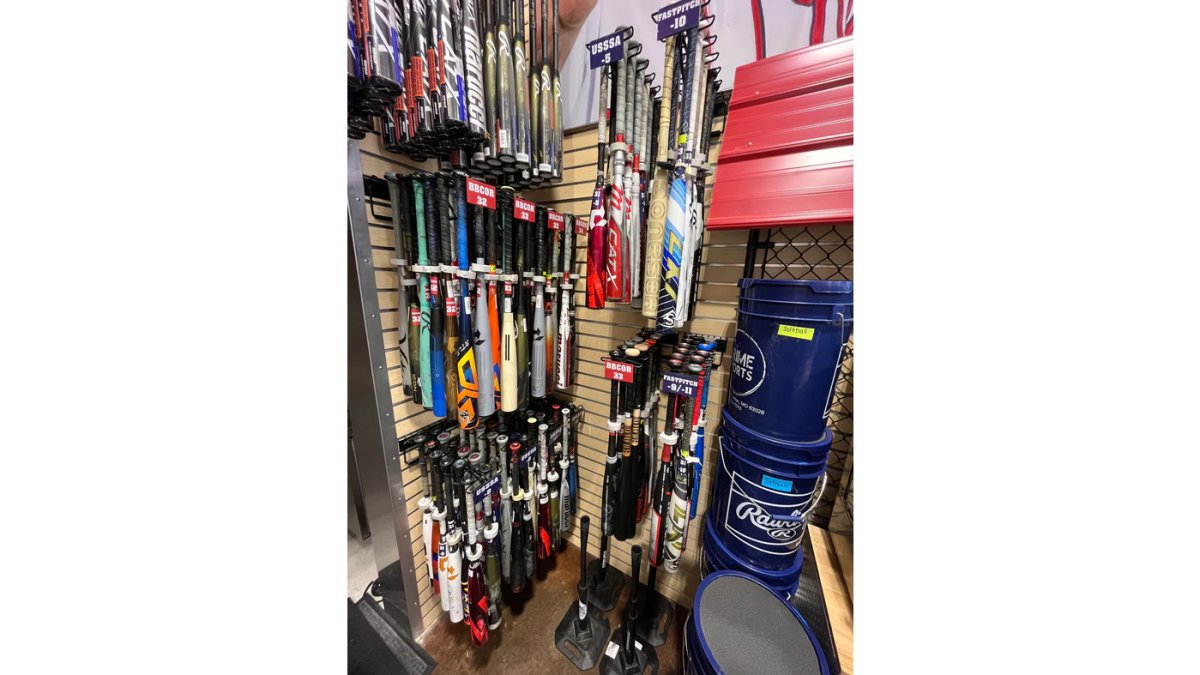
The best way to choose among baseball bats for sale is to swing them. Feel beats any size chart. A bat that specs out perfectly can still feel wrong in a player's hands.
We offer USSSA demo bats at $125.00, sold as used with no warranty and no returns.

Here's a quick reference before you shop:
Check |
What to Look For |
Why It Matters |
|---|---|---|
League stamp |
USA Baseball, USSSA, or BBCOR |
Illegal bats can't be used |
Length |
Mid-hip when stood beside the leg |
Controls swing speed |
Drop weight |
-13 to -3 by age and strength |
Balances speed and power |
Material |
Composite, alloy, or wood |
Feel and feedback differ |
Balance |
Balanced vs. power-balanced |
Same weight swings differently |
For budget-friendly picks that fit contact hitters, our guide to the best baseball bats under $200 narrows the field fast.
Buying a bat blind is how families end up with a return and a missed week of practice. Prime Sports stocks baseball and softball bats from leading brands, keeps a demo wall in Fenton so players can swing before they buy, and pairs every bat with gloves, helmets, and cleats under one roof. Our staff checks league stamps and sizing with you at the counter. Get started with Prime Sports and put the right bat in your player's hands before opening day.
Frequently Asked Questions
How do I choose the right baseball bat for a youth player?
Start with the league rulebook, since it decides whether you need a USA Baseball or USSSA stamp. Then match length to the player's height and weight on a size chart, and pick a drop weight the player can swing without dragging the barrel. A bat that is too heavy slows the swing and teaches bad habits. Bring the player to swing a few options in person when you can.
What does the drop weight on a baseball bat mean?
Drop weight is the length in inches minus the weight in ounces. A 30-inch bat that weighs 20 ounces is a drop 10. A bigger drop number means a lighter bat relative to its length, which suits younger or contact-focused hitters. Smaller drops put more mass in the barrel for power hitters who can still control the swing. The right drop weight depends on the player's strength, not just age.
Are wood or metal bats better for youth baseball?
Most youth leagues require USA Baseball or USSSA metal bats, so wood is usually a training tool rather than a game bat. Wood bats teach barrel control and give honest feedback on mishits, which helps hitters develop. Metal bats offer a larger sweet spot and more forgiveness on off-center contact. Many programs practice with wood and play with metal, and switching between them builds better swing mechanics.
How much should I spend on baseball bats for sale?
You do not need the most expensive bat to get real performance. Several USSSA models at Prime Sports, including the DeMarini 2025 ZEN in drop 10 and drop 8 and the Warstic Gunner, are priced at $99.99. Used demo bats run $125.00 with no warranty, which suits families who want to test a model before buying new. Match the spend to how many seasons the player will use it.
