


Avoiding Uniform Sizing Errors for Teams: 2026 Guide
Table of Contents
- Why Uniform Sizing Errors Cost Teams Time and Money
- How to Measure Players for Team Uniforms: A Repeatable Protocol
- Reading a Team Uniform Size Chart the Right Way
- Fit Preference and Body-Shape Variation Across Your Roster
- Building a Team Uniform Order Form Template That Prevents Typos
- Bulk Team Uniform Ordering Mistakes to Avoid
- Sizing Across Garment Types, Suppliers, and Reorders
- Contingency Planning: Extra Sizes, Inclusive Sizing, and Delivery Timelines
- Frequently Asked Questions
Last Updated: October 5, 2026
Why Uniform Sizing Errors Cost Teams Time and Money
At Prime Sports, we build custom uniforms and team apparel every season, and the pattern is always the same.
Here is what most guides get wrong: they treat sizing as a paperwork step. It is really a risk management step.
Below, we break down a repeatable process any coach or team parent can run, even with volunteers and a tight timeline.
How to Measure Players for Team Uniforms: A Repeatable Protocol
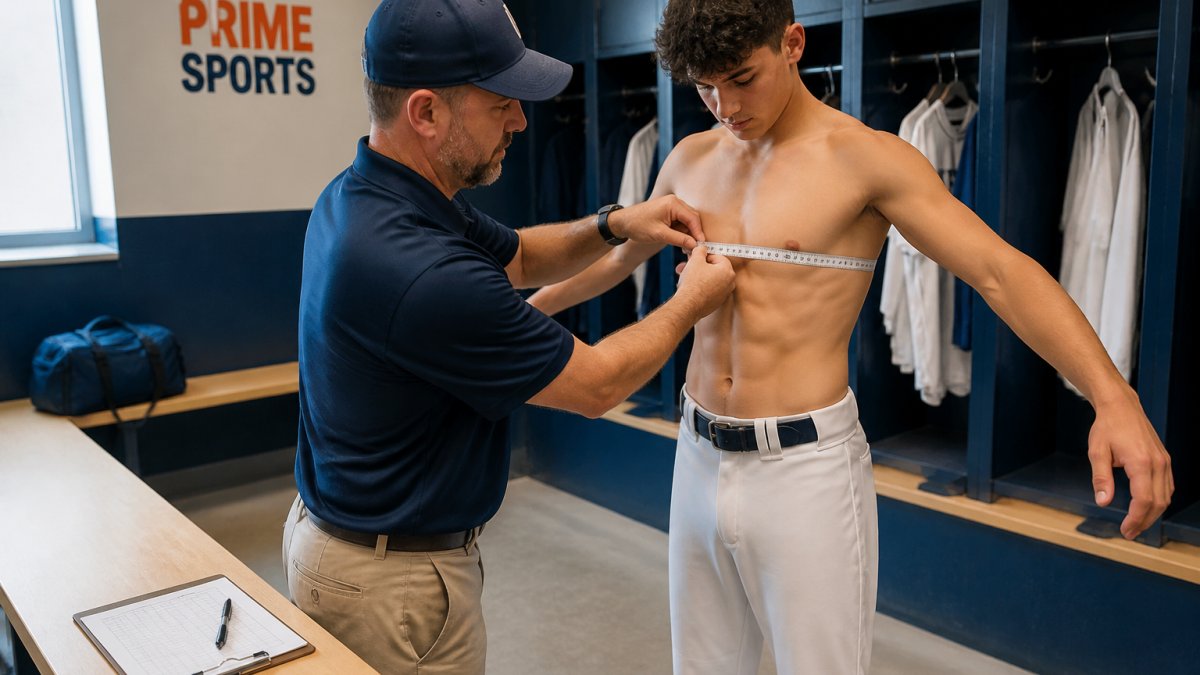
The best way to measure players for team uniforms is a fixed, repeatable protocol: same tape, same landmarks, same order, every time. Consistency matters more than speed.
Set the Conditions Before Anyone Is Measured
Standardize the environment so numbers are comparable across the whole roster:
- Clothing worn: measure over a single t-shirt or compression layer, never over a hoodie, jacket, or pads. Bulky layers can add one to three inches to a chest reading.
- Posture: stand upright, feet flat, arms relaxed at the sides, breathing normally. Do not let players puff up their chest or suck in their waist.
- Tape placement: keep the tape level and flat against the body, snug but not compressing the skin. A tape that twists or rides up reads short.
- Units: record everything in inches to match most domestic size charts, and note the unit on the sheet so nobody converts by mistake.
- Lighting and privacy: measure in a private, well-lit space. Offer a self-measurement option or a same-gender volunteer for anyone who prefers it.
The Five Measurements That Matter Most
Five numbers cover almost every team uniform decision:
- Chest or bust: around the fullest point, tape level under the arms
- Waist: at the natural waistline, not where pants sit
- Hip: around the fullest point of the seat
- Inseam: from the crotch seam to the desired hem
- Height and weight: a fast sanity check against any size chart
Most sizing errors trace back to a missing chest or waist number. Get those two right and you solve the majority of problems.
Assign Roles: Measurer, Recorder, Verifier
A two- or three-person team beats one person guessing. Split the work:
- Measurer holds the tape and calls the number out loud.
- Recorder writes it on the size sheet and reads it back for confirmation.
- Verifier spot-checks the sheet against the roster at the end of the session.
That read-back step catches most transcription errors before they reach the order form. If you only have one volunteer, have the player confirm each number as it is written.
Build a Measurement Kit and Train Volunteers
A measurement kit costs almost nothing and removes guesswork:
- Two soft measuring tapes, because one always walks off
- A printed measurement guide with the five steps and the posture rules
- A clipboard with blank size sheets
- A fabric tape or marker to note hem preferences
- A pen per recorder, so numbers are legible and permanent
Train volunteers on one player first, then let them run the line. Ten minutes of training prevents a season of returns.
Reading a Team Uniform Size Chart the Right Way
A team uniform size chart only works if you know whether it lists garment measurements or body measurements. Confusing the two is the single biggest source of fit complaints.
Garment Measurements vs. Body Measurements
Garment measurements describe the actual shirt or pant laid flat, measured across the chest or waist. Body measurements describe the athlete. A garment chart usually runs one to two inches larger than the body number so the piece fits comfortably.
Before you match anyone, check which system the chart uses. Then compare like with like:
| What you have | What the chart shows | What to do |
|---|---|---|
| Body measurement | Body measurement | Match directly |
| Body measurement | Garment measurement | Add 1-2 inches of ease |
| Garment measurement | Body measurement | Subtract the ease first |
When in doubt, size up for youth players who are still growing. A slightly loose jersey beats one that will not button by midseason.
Fit Preference and Body-Shape Variation Across Your Roster
No two athletes want the same fit, and a good size run reflects that. Some players want a loose jersey; others want a fitted cut. Ignoring preference creates returns even when the numbers are right.
Build in room for variation:
- Ask each player for a fit preference: fitted, standard, or loose
- Note body-shape differences, such as broad shoulders or a longer torso
- Keep one or two extra sizes of the most common fit on hand
- Let players try a sample garment before the final order locks
What most guides miss is that fit is personal. A player who feels comfortable plays better, and comfort often matters more than the exact label on the tag.
Building a Team Uniform Order Form Template That Prevents Typos
A team uniform order form template is your best defense against typos, missed names, and wrong sizes. Build one master sheet and reuse it every season.
Include these columns on every form:
- Player name, spelled out in full
- Jersey number
- Chest, waist, and height in inches
- Fit preference
- Garment type and size
Then run three checks before you submit:
- Read every name aloud against the roster
- Spot-check the five largest and five smallest sizes
- Confirm every jersey number is unique
Roster, Size Sheet, and Approval Workflow
A clean approval workflow stops errors at the door. Follow this order:
- Collect: gather measurements on the size sheet
- Review: compare each number to the size chart
- Approve: have a coach or team parent sign off
- Submit: send the locked sheet to your supplier
Keep one master roster and one size sheet. Two documents, one source of truth. When a parent disputes a size later, you have a signed record.
Bulk Team Uniform Ordering Mistakes to Avoid
Bulk team uniform ordering mistakes usually fall into a few predictable buckets. Spot them early and you avoid the scramble.
- Guessing sizes instead of measuring
- Mixing up youth and adult sizing on one sheet
- Forgetting to double-check jersey numbers
- Ordering exactly the roster count with no spares
- Submitting before a coach reviews the list
The fix is boring but effective: measure, verify, review, then order. Teams that follow those four steps rarely deal with a midseason replacement.
Sizing Across Garment Types, Suppliers, and Reorders
Sizes do not carry across garment types or suppliers automatically. A jersey cut differs from a hoodie cut, and one supplier's medium is another's large.
Plan for these gaps:
- Build a separate size run for each garment type
- Confirm the size chart for every new supplier or style
- Store last season's size sheet for fast reorders
- Re-measure growing youth players each year
If you switch suppliers, treat it like a brand-new order. Re-check every chart, because the numbers rarely line up the same way twice.
Contingency Planning: Extra Sizes, Inclusive Sizing, and Delivery Timelines
Plan for the unexpected before the season starts. A little slack on the order saves a lot of stress later, and the teams that quantify that slack spend less on exchanges and rush shipping.
Quantify Your Spare-Size Buffer
There is no universal right number, but a common pattern is to add a small percentage of the roster in the most frequently ordered sizes, plus a couple of garments at the extremes:
- Core sizes: add roughly one spare for every ten to fifteen players in the most common adult sizes.
- Extremes: add one or two garments at the smallest and largest sizes, since those are the hardest to replace quickly.
- Late additions: keep at least one unassigned garment in a mid-range size for a player who joins after the order locks.
Ask your supplier how they handle exchanges and whether they hold backstock. Knowing the exchange window and restocking fee up front lets you budget for it instead of absorbing a surprise.
Budget for Exchanges and Delays
Incorrect sizes cost more than the garment. Factor in:
- Return shipping and any restocking fee
- The lead time to produce and ship a replacement
- The risk that a discontinued style or color cannot be reordered at all
A small buffer up front is usually cheaper than a midseason replacement order. If your timeline is tight, confirm production and shipping windows in writing before you submit the size run.
Inclusive Sizing and Adaptive Fit
Offer the full size range so every athlete gets a uniform that fits, not just the players near the middle of the chart. Ask your supplier early about extended sizes, because those often take longer to produce and may carry different minimums.
For teams with adaptive needs, ask about:
- Adjustable closures, longer hems, or relaxed cuts
- Seated or wheelchair-friendly measurements, which may require a shorter inseam and different rise
- Sensory-friendly fabrics or tagless construction
Respect Privacy During Measurement
Collecting body measurements is sensitive. Protect players by:
- Measuring in a private space, one person at a time
- Offering self-measurement or a same-gender volunteer
- Storing size sheets securely and sharing numbers only with the supplier
- Letting players note a fit preference instead of discussing their body in front of the group
Frequently Asked Questions
How do you measure players for team uniforms?
Use a soft measuring tape and record five measurements: chest or bust, waist, hip, sleeve length, and inseam. Have players wear a fitted t-shirt and shorts, keep the tape snug but not tight, and measure over the body rather than over bulky clothing. Assign one or two trained volunteers to measure everyone the same way. Write each measurement on a printed size sheet next to the player's name, then compare those numbers against the supplier's team uniform size chart before choosing a size.
How should teams choose uniform sizes when players are between sizes?
When a player falls between two sizes on a team uniform size chart, ask about fit preference first. Most athletes prefer a looser athletic fit for jerseys and a closer fit for pants. If the player wants room to move or plans to wear padding underneath, size up. If they want a tailored look for photos or fanwear, size down. For baseball and softball pants, check whether the fabric has stretch, since that changes how a size boundary feels. Document the decision on your size sheet so reorders match.
Should teams order extra uniforms in common sizes?
Yes. Order two to four extra uniform sets in the most common sizes on your roster, typically adult medium and large. Extras cover late additions, replacement garments for lost or damaged pieces, and mid-season growth spurts. Store them with the team's size sheet so you know exactly what is available. Confirm with your supplier whether reorders are possible mid-season and what the delivery timeline looks like, since custom apparel runs often have minimum quantities.
How can you prevent mistakes in a bulk uniform order?
Build a written approval step before the order is submitted. One person compiles the size sheet, a second person reads every name, number, and size aloud against the roster, and a third confirms the totals match the order form. Check spelling of player names, jersey numbers, and any custom text. Verify the size run adds up to the correct total quantity, and keep a copy of the approved sheet. This double-check catches typos and duplicate entries that would otherwise become costly reprints.
Sizing errors are one of the few problems in team sports that you can almost entirely prevent with a good process. Prime Sports offers a custom uniform builder, a full range of major brands, and apparel decoration services that make bulk ordering simpler for coaches and organizations. Get started with Prime Sports and build a size run your whole roster can trust.